
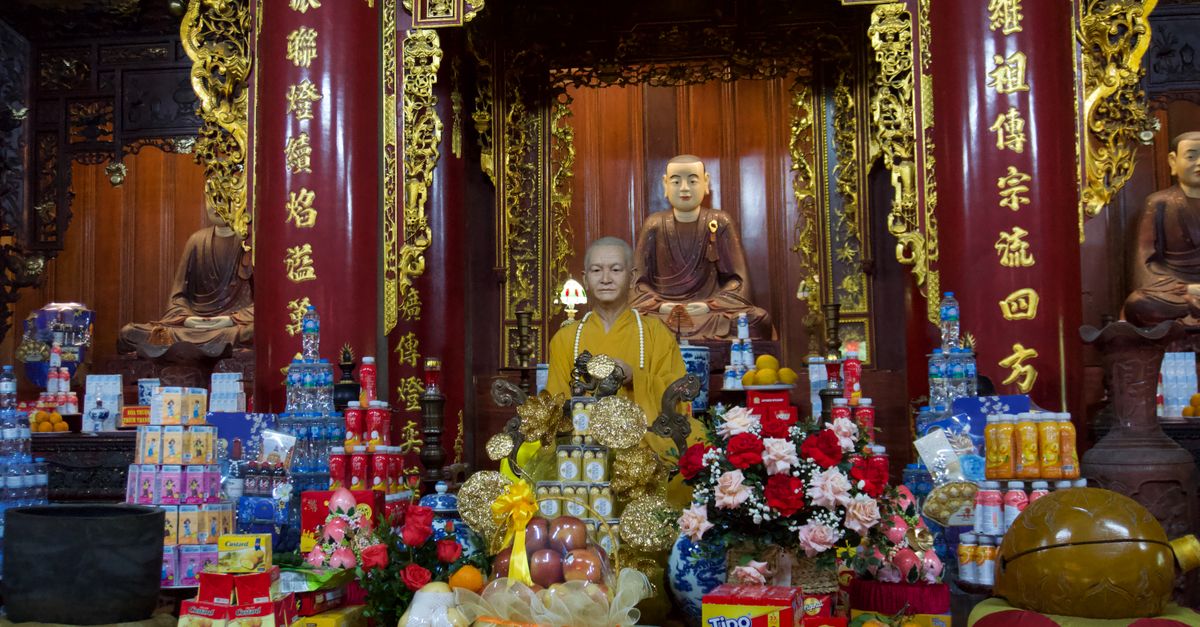
Vietnamese culture mixes Confucian respect for family and age, Buddhist and folk beliefs, and a famously warm sense of hospitality. A few simple habits go a long way, and people readily forgive honest mistakes from visitors who are clearly trying.
Greetings and respect for age
A smile and "xin chào" (hello) is the easy everyday greeting. Handshakes are common between men and in business, while many women prefer a nod and a smile, so let them lead.
Age shapes how people speak to each other. Vietnamese has no neutral word for "you"; instead people use family terms such as anh (older brother), chị (older sister) and em (younger sibling), depending on who is older. Names are written family name first, and people are addressed by their given name, the last part, so Nguyen Van Minh is Mr Minh.
When handing something to an older person, whether money, a gift or a business card, use both hands, or your right hand supported by your left.
Get your Vietnam eSIM in 30 seconds
Instant delivery, 4G/5G speeds, no roaming bills.
What to wear, especially at temples
Everyday dress in cities is casual, but Vietnamese people tend to dress more modestly than many visitors expect, and beachwear belongs at the beach. At pagodas, temples, churches and memorial sites such as the Ho Chi Minh Mausoleum in Hanoi, cover your shoulders and knees. A light scarf or sarong in your daypack solves the problem quickly.
Take your shoes off when entering someone's home and wherever you see a row of footwear by the door, which includes many temple halls.
Religion, pagodas and ancestor worship
Most Vietnamese draw on a blend of Mahayana Buddhism, Taoism, Confucian values and folk religion rather than one strict faith. There is also a sizeable Catholic community, and the south is home to homegrown faiths such as Cao Dai, whose colourful Holy See stands in Tay Ninh.
Ancestor worship runs through daily life. Homes and shops keep small altars with incense, fruit and photos of departed relatives, and on the first and fifteenth days of the lunar month you will see offerings laid out and paper gifts burned on the pavement. Walk around these, never over them. Inside places of worship, speak quietly, don't touch the statues and avoid pointing your feet towards an altar.
Everyday dos and don'ts
- Do beckon someone with your palm facing down; curling a raised finger towards someone is considered rude.
- Do keep calm in disagreements. Raising your voice causes a loss of face for everyone and rarely gets results.
- Do ask before photographing people, especially monks and residents of villages in the northern mountains, and accept a no gracefully.
- Don't touch anyone's head, including a child's.
- Don't leave chopsticks standing in a bowl of rice.
- Don't expect much public affection between couples; holding hands is fine, but more draws stares.
- Don't launch into debates about politics or the war years; listen more than you comment.
Useful Vietnamese phrases
Vietnamese uses the Latin alphabet with accent marks that show tones, so one syllable can mean several things depending on pitch. Locals appreciate any attempt, even if your tones wander.
- Xin chào (sin chow): hello
- Cảm ơn (gahm uhn): thank you
- Xin lỗi (sin loy): sorry, excuse me
- Không, cảm ơn (khom, gahm uhn): no, thank you
- Bao nhiêu tiền? (bow nyew tee-en): how much is it?
Family, festivals and Tet
Family is the centre of Vietnamese life, and nothing shows it more than Tet, the Lunar New Year in late January or February. People travel home, clean and decorate their houses, and give lucky money to children in red envelopes. The first visitor to cross a home's threshold in the new year is thought to shape the family's luck, so wait for an invitation before dropping in on friends during the holiday.
Stay connected in Vietnam
A translation app, quick searches on dress codes and festival dates, and messages to your homestay host all make cultural encounters smoother. Many Vietnamese message each other on Zalo, while plenty of hosts also use WhatsApp, and both run over a HelloSIM eSIM. The eSIM is data-only, so WhatsApp stays on your usual number; set it up at home before you travel and it connects when you arrive.
Get your Vietnam eSIM in 30 seconds
Instant delivery, 4G/5G speeds, no roaming bills.