
Singapore is modern, efficient and English-speaking, so it is easy to assume there is little to learn about local customs. In fact, the city-state blends Chinese, Malay, Indian and Eurasian traditions, and a little cultural awareness goes a long way.
A multicultural city-state
Most Singaporeans are of Chinese descent, with large Malay and Indian communities and a smaller Eurasian one. There are four official languages, English, Mandarin, Malay and Tamil, and English is the common language of work, schools and signs. Peranakan culture, which grew out of marriages between Chinese traders and local Malay families, adds its own cuisine, beadwork and colourful shophouse architecture.
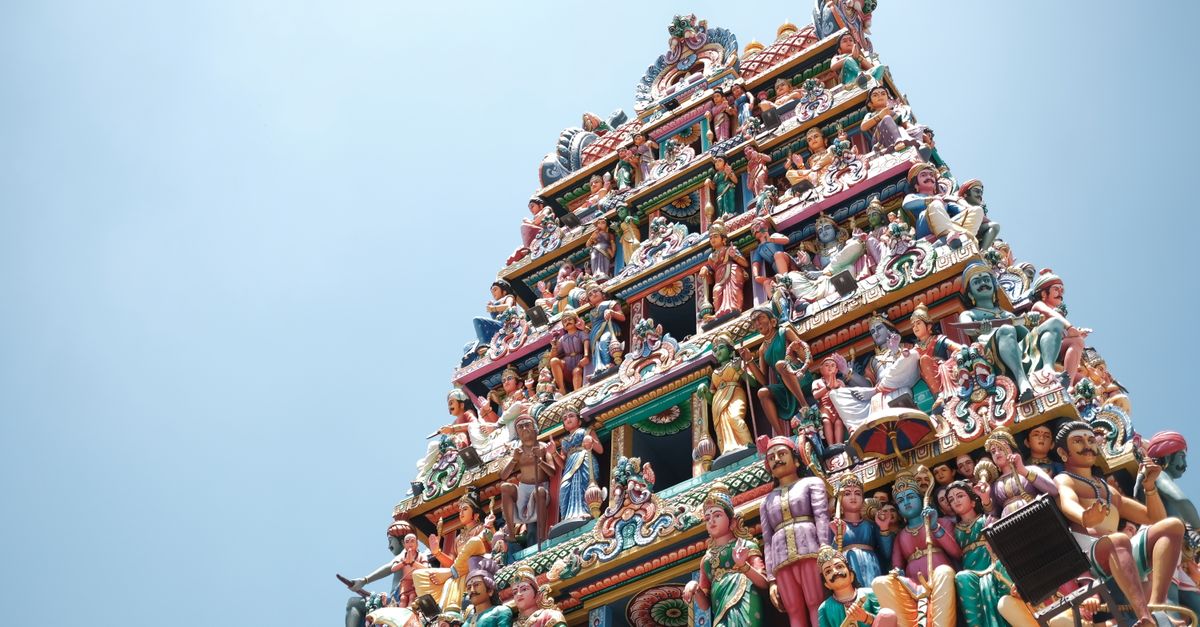
Religion is visible everywhere: Buddhist and Taoist temples, mosques, Hindu temples and churches often stand a few streets apart. Racial and religious harmony is taken seriously, so careless jokes or remarks about race or religion are best avoided.
Get your Singapore eSIM in 30 seconds
Instant delivery, 4G/5G speeds, no roaming bills.
Greetings and everyday manners
- A light handshake with a smile is the usual greeting. Some Muslim and Hindu people prefer not to shake hands with the opposite sex, so let the other person offer first.
- Give and receive business cards, gifts and money with both hands, or with the right hand.
- Point with your whole hand or your thumb rather than a single finger.
- Older people are often called "uncle" or "auntie" as a friendly sign of respect; you will hear it at every hawker stall.
- Keep your voice down on public transport and queue patiently. Pushing in is frowned upon.
Dress code and places of worship
Day to day, light and casual clothing is fine. Temples and mosques expect modesty, so cover your shoulders and knees. Remove your shoes before entering a mosque or a Hindu temple, and at Chinese temples where signs ask you to. Sultan Mosque in Kampong Glam lends robes to visitors who need them, and non-Muslims are asked not to visit during prayer times.
Inside temples, move quietly, avoid touching statues or offerings, and ask before photographing people at prayer. During the Hungry Ghost Festival, usually around August, you may see food offerings and burning paper on pavements. Step around them rather than over them.
Rules and public behaviour
Singapore is known for clear public rules, and posted signs are meant to be followed. Signs in MRT stations show that eating, drinking and carrying durians are not allowed, smoking is restricted to marked areas, and litter always goes in a bin. Cross at pedestrian crossings rather than weaving through traffic. Locals rarely make a fuss, but following the signs is the simplest way to avoid awkward moments.
Festivals and holidays
The calendar reflects the mix of communities. Chinese New Year, in January or February, brings lanterns to Chinatown, mandarin oranges and red envelopes of money given to children. Before Hari Raya Puasa, which marks the end of Ramadan, Geylang Serai hosts a large evening bazaar. Deepavali lights up Little India in October or November, Thaipusam features a devotional procession, and Vesak Day honours the Buddha. National Day on 9 August brings flags, a parade and fireworks.
Language basics and Singlish
English is spoken almost everywhere, often as Singlish, a lively local English sprinkled with Malay, Hokkien and other words. A few to recognise and try:
- Terima kasih (Malay), xie xie (Mandarin) and nandri (Tamil): thank you.
- Makan: to eat, as in "Let's go makan."
- Shiok: delicious or great.
- Tapau or da bao: takeaway.
- Can: yes, it's possible, as in "Can or not?" "Can!"
Adding "lah" to the end of a sentence is classic Singlish, but a polite thank you in someone's own language usually lands better than an imitation.
Stay connected in Singapore
Data helps you navigate culture as well as streets: look up prayer times before visiting a mosque, check this year's festival dates, translate a temple sign in Chinese or Tamil, or message a local guide on WhatsApp. HelloSIM eSIMs are data-only, set up at home before you travel and connect as soon as you reach Singapore, while your regular number stays with your home SIM.
Get your Singapore eSIM in 30 seconds
Instant delivery, 4G/5G speeds, no roaming bills.