
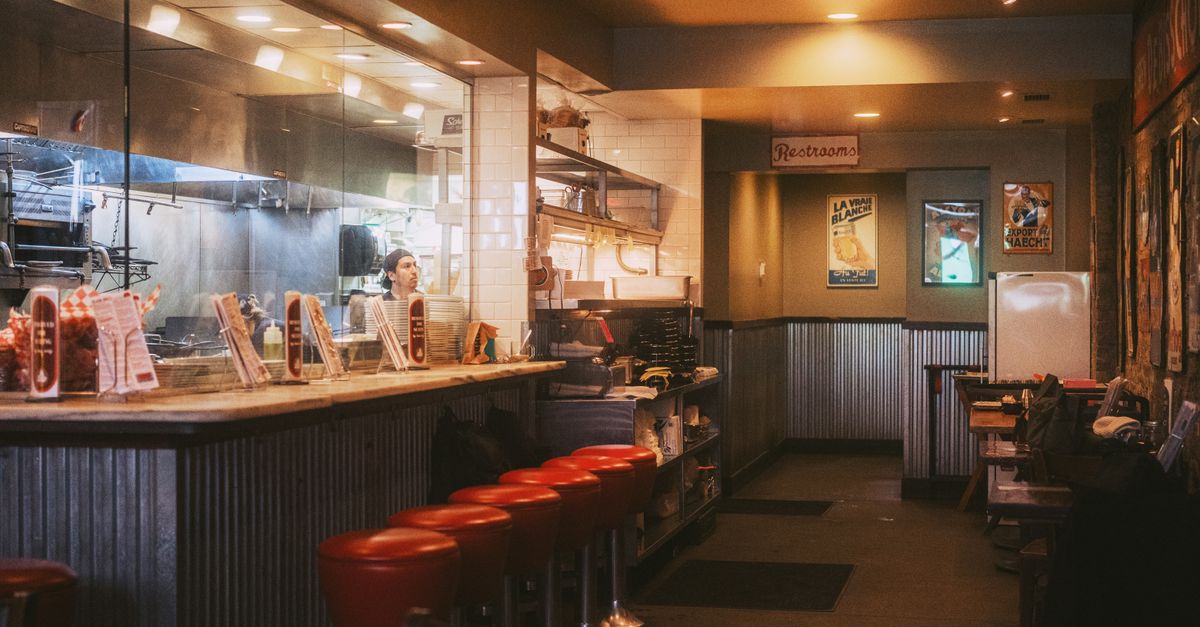
The United States is enormously diverse, and customs shift between a New York subway car, a Texas ranch town and a Hawaiian beach. Still, a few shared habits, from friendly small talk to personal space and tipping, will help you fit in almost anywhere.
Greetings and small talk
A firm handshake with eye contact is the standard greeting when meeting someone for the first time; friends often hug, while cheek kisses are rare. Americans switch to first names quickly, even with people they've just met. "How are you?" is usually a greeting rather than a real question, and a quick "Good, thanks, how are you?" is the expected reply. Cashiers, servers and strangers in line often start friendly small talk; it's normal and doesn't mean they expect a long conversation.
Get your United States eSIM in 30 seconds
Instant delivery, 4G/5G speeds, no roaming bills.
Dress and appearance
Dress is generally casual. Jeans and sneakers are fine in most restaurants, museums and theaters, though upscale restaurants and some bars expect smart-casual clothing. Beachwear stays at the beach and pool, so cover up in shops and restaurants, even in beach towns. Indoor air conditioning can be fierce in summer, so carry a light layer.
Religion and visiting sacred sites
The country has no official religion and is home to many faiths. Christianity is the most widely practiced, alongside significant Jewish, Muslim, Hindu and Buddhist communities. Many churches, cathedrals and historic missions welcome visitors outside services; dress modestly, keep your voice down and check whether photography is allowed.
Treat Native American sacred places and tribal lands with particular respect. Some sites ask visitors not to take photos, climb certain rock formations or remove anything, and those requests should always be followed.
Dos and don'ts
- Do wait your turn: lines at counters, bus stops and attractions are taken seriously.
- Do keep about an arm's length of personal space and avoid touching people you don't know well.
- Do tip for table service, bar service, taxis and hotel housekeeping; locals treat it as part of the cost, not an extra.
- Do stand to one side on escalators in busy cities so people can pass.
- Don't raise politics, religion or guns with people you've just met unless they bring them up.
- Don't photograph people, especially children, without asking first.
- Don't assume one region speaks for the whole country; Americans are often proud of their own state or city.
Punctuality and everyday courtesy
Being on time matters, especially for tours, restaurant reservations and business meetings, and turning up late without a message is considered rude. Saying "please", "thank you" and "excuse me" goes a long way, and holding the door for the person behind you is a common courtesy. Customer service is usually upbeat and attentive, partly because tips make up a large share of many service workers' income. Compliments from strangers on your clothes or accent are common and simply meant kindly.
Language basics
English is the main language, and Spanish is widely spoken, especially in the Southwest, California, Florida and big cities. Visitors who learned British English will notice that a lift is an elevator, a queue is a line and petrol is gas. These phrases help most:
- "Where's the restroom?" is how to ask for the toilet in public places.
- "Can I get the check?" asks for the bill.
- "For here or to go?" means eat in or take away.
- "First floor" is the ground floor, not the one above it.
- "Y'all", short for "you all", is a friendly plural you'll hear across the South.
Stay connected in the United States
Translation apps, quick slang lookups and messaging the new friends you meet all run on mobile data, as do the maps that get you to a service or museum on time. A HelloSIM eSIM is data-only, so your own number and WhatsApp work as usual over the internet. Set it up before departure and it connects once you arrive in the US.
Get your United States eSIM in 30 seconds
Instant delivery, 4G/5G speeds, no roaming bills.