
The UAE is modern, international and welcoming, but it's also a Muslim country shaped by Bedouin and Gulf traditions. Most residents are expatriates, so you'll hear dozens of languages, yet Emirati customs still set the tone in public life. A little awareness goes a long way.
Emirati life and identity
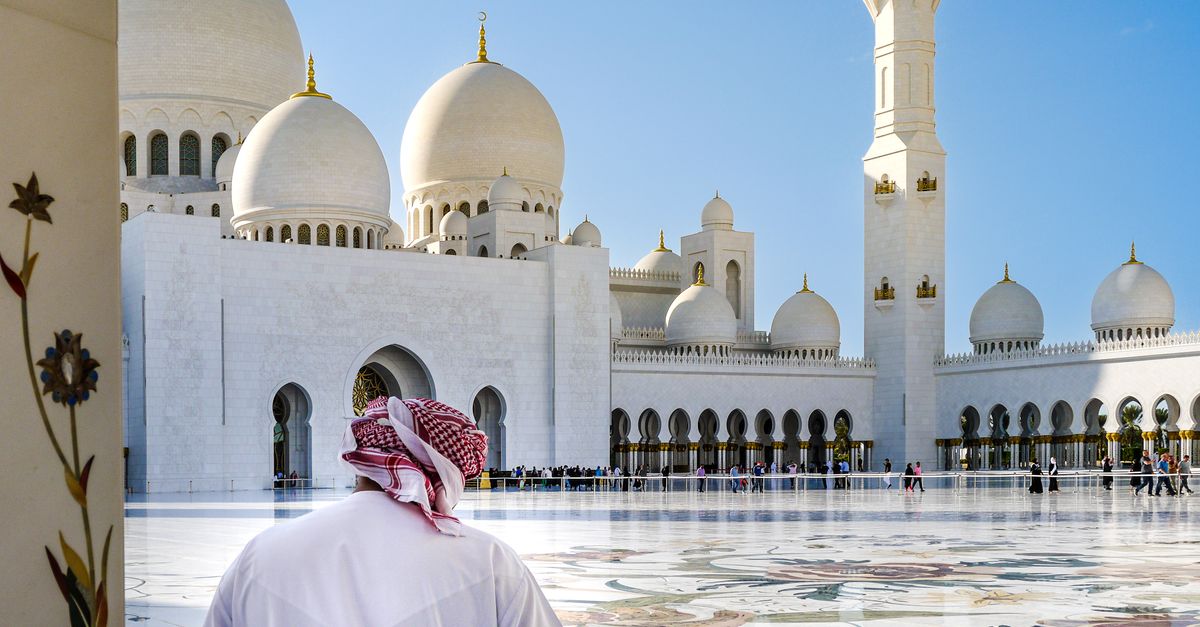
Emiratis are a minority in their own country, so you'll often meet more nationalities than locals. Traditional dress is a point of pride: many Emirati men wear the white kandura with a ghutra headdress, and many women wear a black abaya with a shayla headscarf. Hospitality is central to the culture, rooted in the majlis, the sitting room where guests are welcomed with coffee and dates.
Get your United Arab Emirates eSIM in 30 seconds
Instant delivery, 4G/5G speeds, no roaming bills.
Greetings and conversation
- "As-salamu alaykum" (peace be upon you) is always a welcome greeting; the reply is "Wa alaykum as-salam".
- Men usually shake hands with men. With someone of the opposite sex, wait to see whether they offer a hand; a hand on the heart with a nod is a polite alternative.
- Use your right hand to greet, eat and pass things.
- Small talk often begins with family and health. Avoid criticising the country, its leaders or religion, even as a joke.
What to wear
- In malls, souks and other public places, cover your shoulders and knees; loose, light fabrics are both comfortable and appropriate.
- Swimwear belongs at hotel pools and beaches. Cover up before walking into a lobby, café or the street.
- Sharjah and the smaller emirates are more conservative than Dubai's beach districts.
- Pack a light layer anyway, as indoor air conditioning can be surprisingly cold.
Religion, mosques and Ramadan
You'll hear the call to prayer five times a day, and Friday midday prayers are the most important of the week.
- Several mosques welcome non-Muslim visitors, most famously the Sheikh Zayed Grand Mosque in Abu Dhabi. Modest dress is required, women also cover their hair, and it's worth checking the visiting arrangements before you go.
- Inside any mosque, remove your shoes, speak quietly and never walk in front of someone who is praying.
- During Ramadan, avoid eating, drinking or smoking in public during daylight hours, dress a little more conservatively and keep music low. Evenings are lively, and joining an iftar is a memorable experience.
Everyday dos and don'ts
- Do ask before photographing people, especially women and families, and don't photograph government or military buildings.
- Do stay patient and polite with officials, staff and drivers; raised voices rarely help.
- Don't go beyond holding hands when it comes to public affection.
- Don't swear or make rude gestures, including in messages or on social media, as this is taken very seriously in the UAE.
- Don't drink outside licensed venues or appear drunk in public.
- Do read your government's travel advice on local customs and rules before you go.
Useful Arabic phrases
English is spoken almost everywhere, so you'll get by easily, but a few words of Arabic are always appreciated.
- Marhaba: hello
- Shukran: thank you
- Min fadlak / min fadlik: please (to a man / to a woman)
- Inshallah: God willing, heard constantly when talking about plans
- Yalla: let's go, come on
Stay connected in the United Arab Emirates
Having data on hand makes good manners easier: you can check a mosque's dress code before you set off, look up this year's Ramadan dates or a public holiday, and translate a sign on the spot. A HelloSIM eSIM gives you that without hunting for Wi-Fi. It's data-only, so you keep your own number for calls and texts, and you install it before the trip so it's ready to connect when you land.
Get your United Arab Emirates eSIM in 30 seconds
Instant delivery, 4G/5G speeds, no roaming bills.