
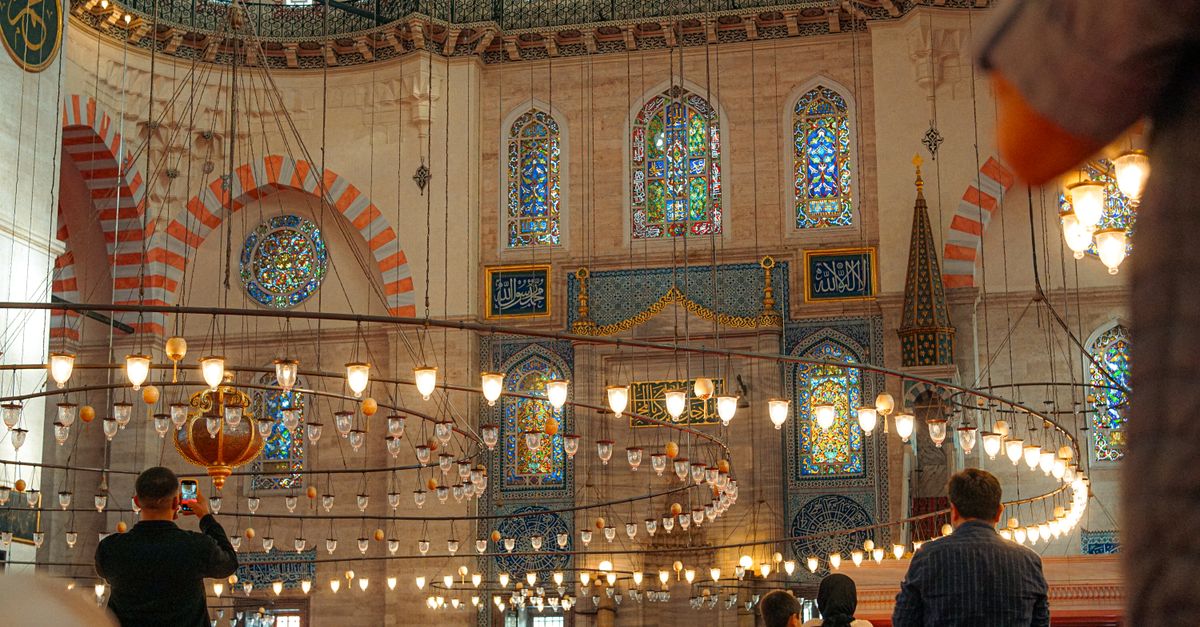
Turkish hospitality is famous, and a little cultural awareness turns polite exchanges into genuine ones. Customs differ between cosmopolitan Istanbul, the resort coast and more conservative inland towns, so read the room and follow local cues.
Greetings and hospitality
A handshake is the standard greeting, and friends often kiss on both cheeks. Between men and women, wait to see whether a hand is offered: some religious people prefer not to shake hands with the opposite sex, and a hand on the heart with a slight nod is a warm alternative. Polite address uses "Bey" for men and "Hanım" for women after the first name, as in "Ahmet Bey" or "Ayşe Hanım".
Being offered tea in a shop, a carpet store or someone's home is everyday hospitality. Accepting a glass does not oblige you to buy anything.
Get your Turkey eSIM in 30 seconds
Instant delivery, 4G/5G speeds, no roaming bills.
What to wear
Cities and resorts are relaxed about clothing, and shorts and T-shirts are normal in central Istanbul and on the coast. Swimwear belongs on the beach or by the pool, not in town. In smaller towns, rural areas and the east, dress a little more modestly, with shoulders and knees covered. A light scarf or shawl is worth packing for both sun and mosque visits.
Visiting mosques and religious sites
Most Turks are Muslim, and mosques welcome respectful visitors outside prayer times.
- Take your shoes off at the entrance; shelves or plastic bags are usually provided.
- Women cover their hair, shoulders and legs, and men avoid shorts and sleeveless tops. Larger mosques often lend scarves and wraps.
- Visits pause during the five daily prayers, and Friday midday prayers are the busiest.
- Keep your voice down, don't walk directly in front of people praying, and ask before photographing anyone.
Dos and don'ts
- Do remove your shoes when entering someone's home.
- Do bargain in bazaars and with street sellers, with a smile, but not in shops with price tags.
- Do accept tea or a small treat when offered; refusing everything can come across as cold.
- Don't joke about Mustafa Kemal Atatürk or the Turkish flag; both are treated with deep respect.
- Don't blow your nose loudly at the table.
- Don't eat, drink or smoke conspicuously in the street during Ramadan days in conservative areas. In big cities and resorts life carries on as normal, but discretion is appreciated.
Body language and everyday habits
A small upward nod of the head, often with raised eyebrows and a "tsk" sound, means "no", which visitors easily misread. Personal space is closer than in northern Europe, and people may touch your arm while talking. Older people get priority for seats on public transport, and offering yours is appreciated. Public displays of affection beyond holding hands draw looks outside the big cities.
Language basics
Turkish uses the Latin alphabet with a few extra letters: ç sounds like "ch", ş like "sh", and ğ is silent, lengthening the vowel before it. English is common in tourist areas but less so elsewhere, and any effort in Turkish is warmly received.
- Merhaba (mehr-ha-ba): hello
- Teşekkür ederim (teh-shek-kewr eh-deh-rim): thank you
- Lütfen (lewt-fen): please
- Ne kadar? (neh ka-dar): how much?
- Kolay gelsin (ko-lai gel-sin): a friendly "may it be easy", said to people at work
Stay connected in Turkey
Etiquette questions pop up in the moment: whether a mosque is open between prayers, what a sign says, how to reply to a greeting. A phone with data answers them on the spot. A HelloSIM eSIM is data-only, installs at home before you leave and connects once you arrive, while your usual number and WhatsApp stay exactly as they are.
Get your Turkey eSIM in 30 seconds
Instant delivery, 4G/5G speeds, no roaming bills.