
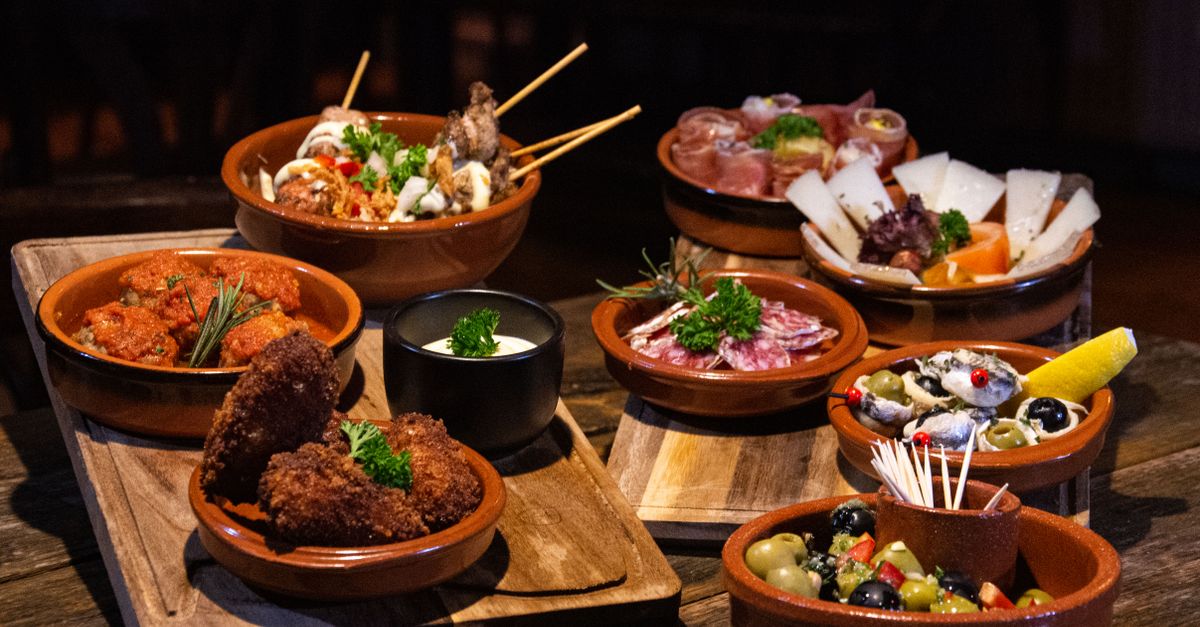
Eating in Spain is less about restaurants and more about rhythm: a coffee standing at the bar, a long lunch, a slow evening drifting between tapas bars. Learn the timetable and a handful of dishes, and you will eat brilliantly almost anywhere in the country.
When Spain eats
- Breakfast (desayuno) is light: coffee with toast rubbed with tomato and olive oil (pan con tomate), or a pastry.
- Lunch (comida) is the main meal, usually from around 2 pm to 4 pm. On weekdays many restaurants offer a menú del día, a fixed-price set lunch with a starter, a main course and dessert or coffee, often with bread and a drink.
- Dinner (cena) starts late, often around 9 pm or later. Places that fill up at 7 pm are usually aimed at tourists.
- In between, an afternoon snack (merienda) and an early-evening drink with a tapa keep everyone going.
Get your Spain eSIM in 30 seconds
Instant delivery, 4G/5G speeds, no roaming bills.
Signature dishes to try
- Paella: from the Valencia region, where the traditional version uses chicken, rabbit and green beans. Seafood paella is popular all along the coast.
- Tortilla española: a thick potato omelette, with or without onion, a question Spaniards debate with surprising passion.
- Jamón ibérico: cured ham from Iberian pigs, sliced paper-thin. Jamón serrano is its more everyday cousin.
- Gazpacho and salmorejo: chilled tomato soups from Andalusia, perfect on a summer day.
- Pulpo a la gallega: tender octopus with paprika and olive oil, a Galician classic.
- Cocido madrileño and fabada asturiana: hearty stews from Madrid and Asturias for colder months.
Tapas, pintxos and street food
Tapas are small plates shared at the bar. Classic orders include patatas bravas, croquetas, gambas al ajillo (garlic prawns) and pimientos de Padrón, small green peppers where the occasional one is fiery. In the Basque Country tapas become pintxos, elaborate bites often served on bread and lined up along the counter. In Granada, León and some other cities, a free tapa still arrives with each drink in many bars.
Spain's street food is mostly market food. Covered markets in most cities sell cheese, olives and ready-to-eat dishes, and Madrid's bocadillo de calamares, a fried squid sandwich, is a no-frills classic around Plaza Mayor. For something sweet, dip churros into thick hot chocolate, whether for breakfast or after a very late night.
What to drink
- Wine: Rioja and Ribera del Duero reds, crisp Albariño whites from Galicia, and cava, the sparkling wine made mostly in Catalonia.
- Sherry: from Jerez in Andalusia, ranging from bone-dry fino to sticky-sweet Pedro Ximénez.
- Beer: ask for a caña, a small draught beer.
- Vermouth (vermut): a weekend aperitivo ritual, especially in Madrid and Barcelona.
- Tinto de verano: red wine with lemon soda, which many locals drink in summer instead of sangria.
- Coffee: café con leche in the morning, a cortado or café solo after lunch.
- Horchata: a sweet, chilled tiger-nut drink from Valencia.
Etiquette and tipping
- In bars you often pay at the end rather than per round. Ask "¿Cuánto es?" when you are ready to settle up.
- The bill will not arrive until you ask for it: "La cuenta, por favor."
- Tipping is appreciated but not expected. Locals round up at the bar, and for a good sit-down meal a few euros or around 5 to 10 percent is generous.
- Bread may be added to the bill even if you did not order it, so send it back if you do not want it.
Dietary needs
Spanish cooking leans heavily on pork and seafood, and ham turns up in unexpected places, from croquetas to vegetable stews. Vegetarian and vegan options are easy to find in big cities, but in rural areas ask "¿Lleva carne o pescado?" (Does it contain meat or fish?). Gluten-free diners will find "sin gluten" widely understood, and staff can usually tell you about allergens if you ask. Want water without paying for a bottle? Ask for "agua del grifo", tap water, which is fine to drink in most places.
Stay connected in Spain
Mobile data turns a menu written only in Spanish into something you can read with a camera translation app, and it helps you check reviews or find a kitchen still serving at midnight. A HelloSIM eSIM is data-only, so your regular number remains on your phone for calls and texts. Install it before you fly and it connects when you arrive in Spain.
Get your Spain eSIM in 30 seconds
Instant delivery, 4G/5G speeds, no roaming bills.