
Spain is warm, sociable and relaxed, but it runs on its own timetable and has a strong sense of regional identity. A little cultural awareness goes a long way, and Spaniards are generally forgiving of visitors who make an effort.
Greetings and social life
- Friends and acquaintances usually greet each other with a light kiss on each cheek (dos besos). Follow the other person's lead if you are unsure.
- A handshake is normal in business or when meeting someone formally for the first time.
- Say "hola" or "buenos días" when you walk into a small shop, a lift or a waiting room, and "adiós" when you leave.
- Conversation is lively and can be loud by northern European standards, and jumping in is often a sign of interest rather than rudeness.
- Use "usted", the formal "you", with older people and officials. "Tú" is common among younger people and in casual settings.
Get your Spain eSIM in 30 seconds
Instant delivery, 4G/5G speeds, no roaming bills.
The Spanish timetable
Daily life starts and ends later than in most of Europe. Lunch happens around 2 pm, dinner rarely before 9 pm, and in summer the streets fill up after dark once the heat fades. In smaller towns many shops close for a long afternoon break and reopen into the evening, while big-city chains stay open all day. Sunday opening varies by region and is more common in tourist areas, but expect a quiet Sunday morning almost everywhere. Plan around this rhythm rather than fighting it.
One country, many identities
Spain has several co-official languages alongside Castilian Spanish: Catalan in Catalonia and the Balearic Islands, Valencian in the Valencia region, Basque (Euskara) in the Basque Country and parts of Navarre, and Galician in Galicia. Many people identify strongly with their region, and politics, particularly around Catalan independence, can be a sensitive subject, so it is wise to listen rather than offer opinions. A few words in the local language are always appreciated, even though everyone also speaks Spanish.
Religion, churches and dress
Spain is historically Catholic, and cathedrals, churches and processions remain central to local life, even for people who rarely attend mass. When visiting religious sites:
- Cover your shoulders and avoid very short shorts or skirts. Beachwear is not appropriate.
- Keep your voice low and avoid sightseeing during services.
- During Semana Santa (Holy Week) processions, stand back, stay quiet as the floats pass and never cut across the route.
Swimwear belongs on the beach. Strolling through town shirtless or in a bikini is frowned upon in many coastal cities, Barcelona included.
Dos and don'ts
- Do take your time over meals. Asking for the bill with your main course feels abrupt.
- Do ask "¿Quién es el último?" (Who is last?) at market stalls and bakeries to find your place in an informal queue.
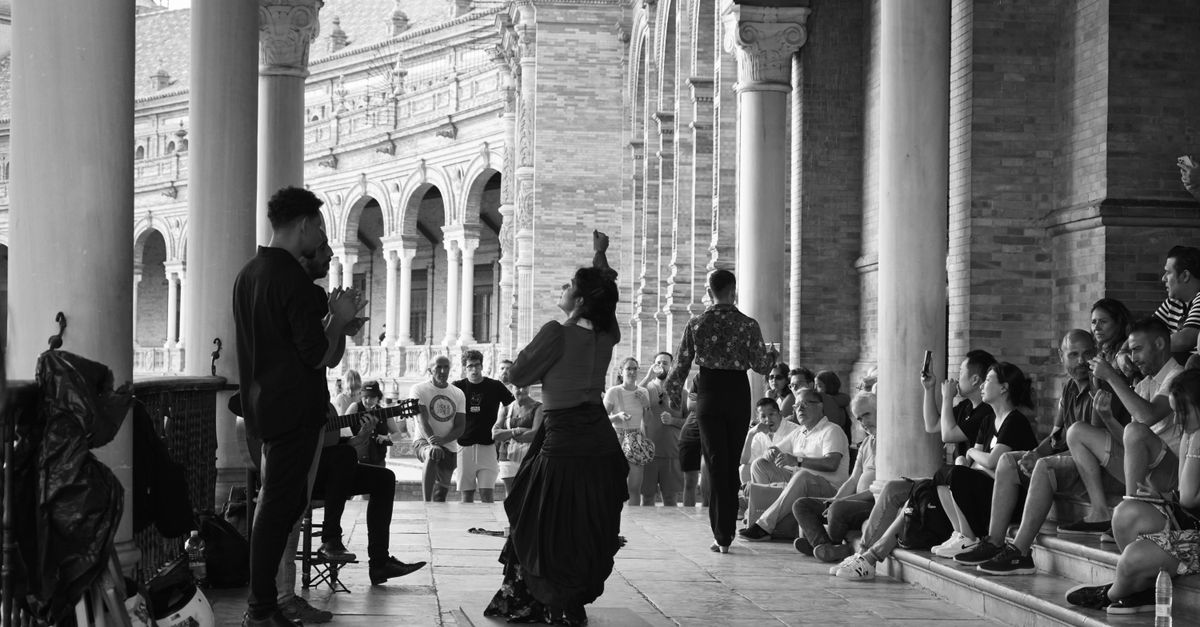
- Don't reduce Spain to flamenco and bullfighting. Flamenco is rooted in Andalusia, and bullfighting divides opinion sharply.
- Don't call Catalan, Basque or Galician "dialects". They are distinct languages, and Basque is not even related to Spanish.
- Do dress up a little for evenings out. Spaniards tend to look smart even for a casual drink.
Useful phrases
A handful of words in Spanish (Castilian) covers most situations:
- Hola / Buenos días: Hello / Good morning
- Por favor / Gracias: Please / Thank you
- Perdone: Excuse me
- ¿Habla inglés?: Do you speak English?
- No hablo mucho español: I don't speak much Spanish
In Catalonia, try "Bon dia" (good morning) and "Moltes gràcies" (thank you very much). In the Basque Country, "Kaixo" means hello and "Eskerrik asko" means thank you.
Stay connected in Spain
Having data in your pocket helps when culture throws you a curveball: translating a sign in Catalan, checking whether a cathedral is open for visitors or holding mass, or finding out which town is celebrating its fiesta this weekend. HelloSIM eSIMs are data-only, so messaging apps and your usual WhatsApp number keep working exactly as they do at home. Set the eSIM up before departure and it joins a local network when you get to Spain.
Get your Spain eSIM in 30 seconds
Instant delivery, 4G/5G speeds, no roaming bills.