
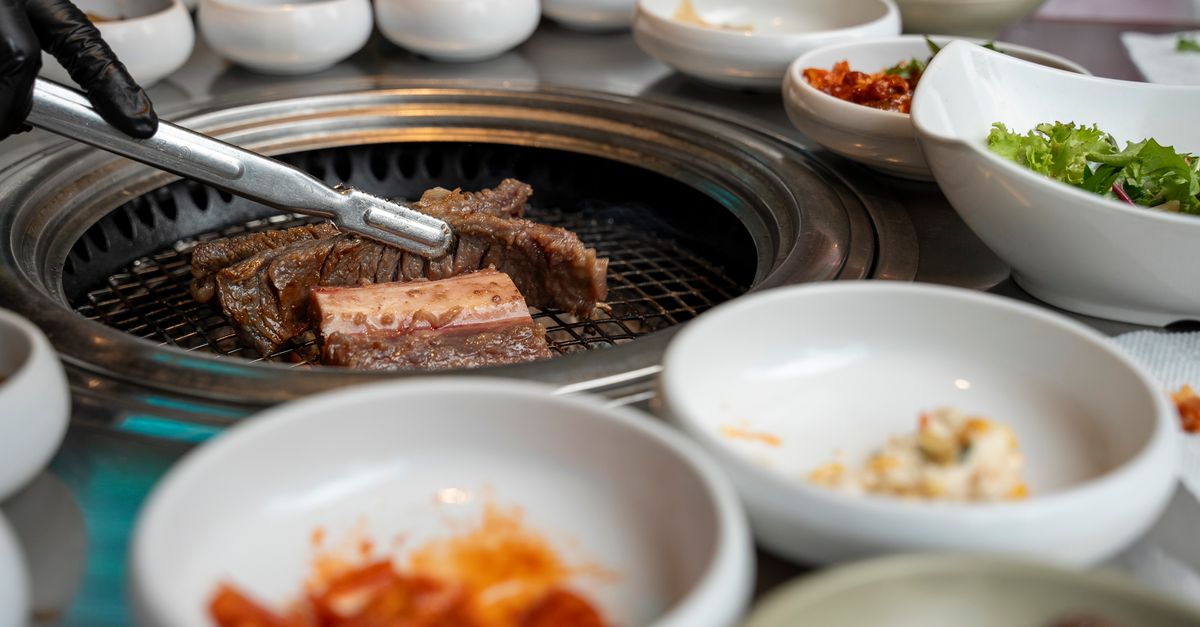
Korean food is bold, communal and built around the shared table: a main dish surrounded by small side plates that keep coming. Eating well is easy and rarely formal, and some of the best meals happen on plastic stools in a market.
Signature dishes to try
- Korean barbecue: pork belly (samgyeopsal) or marinated beef (bulgogi, galbi) grilled at your table, then wrapped in lettuce with garlic, chilli and ssamjang paste.
- Bibimbap: rice topped with vegetables, egg and chilli paste. Order dolsot bibimbap for a sizzling stone bowl with crispy rice at the bottom.
- Jjigae: bubbling stews such as kimchi jjigae, soft tofu sundubu jjigae and fermented soybean doenjang jjigae are everyday comfort food.
- Naengmyeon: chewy buckwheat noodles in icy broth, a summer favourite.
- Samgyetang: a whole small chicken stuffed with rice, ginseng and jujube, traditionally eaten on the hottest days of summer.
- Korean fried chicken: double-fried, either plain or glazed in sweet-spicy sauce.
Kimchi, of course, turns up at almost every meal, in dozens of forms beyond the classic cabbage.
Get your South Korea eSIM in 30 seconds
Instant delivery, 4G/5G speeds, no roaming bills.
Street food and markets
Markets are where Korea snacks. Look for tteokbokki (chewy rice cakes in a sweet-spicy sauce), eomuk (fish cake skewers in hot broth), gimbap rolls, sundae (Korean blood sausage) and hotteok, a griddled pancake filled with brown sugar and nuts that tastes best on a cold evening.
- Seoul: Gwangjang Market for crispy mung bean pancakes (bindaetteok) and mini gimbap; Myeongdong's evening stalls for skewers and sweets.
- Busan: Jagalchi Fish Market, where you can choose seafood downstairs and have it prepared upstairs.
- Jeju: Dongmun Market for black pork, seafood and anything made with local tangerines.
Regional specialities
Jeonju is famous for its bibimbap, Busan for dwaeji gukbap (pork and rice soup) and milmyeon (thin wheat noodles in cold broth), Chuncheon for dak-galbi (spicy stir-fried chicken) and Jeju for heuk-dwaeji, its black pork. Coastal towns everywhere serve hoe, thinly sliced raw fish.
What to drink
- Soju: the clear national spirit, usually drunk in small shots alongside food.
- Makgeolli: milky, lightly fizzy rice wine, traditionally paired with savoury pancakes on rainy days.
- Beer: light lagers dominate, and fried chicken with beer (chimaek) is a national pastime. Mixing beer and soju makes somaek.
- Alcohol-free: barley or corn tea is often served free with meals, cafés are everywhere, and sikhye, a sweet rice drink, is a bathhouse classic.
Restaurant habits, etiquette and tipping
Many restaurants specialise in one dish, so glance at what other tables are eating before you sit down. Side dishes (banchan) come with the meal and refills are usually free. Press the call button on the table or call out "jeogiyo" to get attention. Barbecue places often expect at least two portions, which can make solo dining tricky, though eating alone is increasingly normal. Convenience stores are a lifeline for quick meals, from triangle gimbap to instant noodles you cook at the counter.
- Tipping isn't customary; you usually pay at the counter on the way out.
- Let the eldest at the table start first, and don't stand your chopsticks upright in rice.
- Use the spoon for rice and soup, chopsticks for side dishes.
- Traditionally you pour for others rather than yourself, and hold your glass with both hands when someone older pours for you.
Dietary notes
Vegetarians need to ask questions: kimchi often contains fish sauce or salted shrimp, and many soups use anchovy or beef broth. Buddhist temple cuisine is entirely plant-based and a reliable choice, and Seoul has a growing number of vegan restaurants. Halal restaurants cluster around Itaewon in Seoul. Soy sauce and chilli pastes frequently contain wheat, so if you avoid gluten, carry a note in Korean explaining what you can't eat.
Stay connected in South Korea
Menus in small restaurants are often in Korean only, so a translation app with a camera mode turns guesswork into an informed order, and map apps show photos and reviews of dishes before you queue. A HelloSIM eSIM gives you that data from the moment you land: it's data-only, you install it at home before the trip, it connects on arrival, and your WhatsApp stays on your usual number.
Get your South Korea eSIM in 30 seconds
Instant delivery, 4G/5G speeds, no roaming bills.