
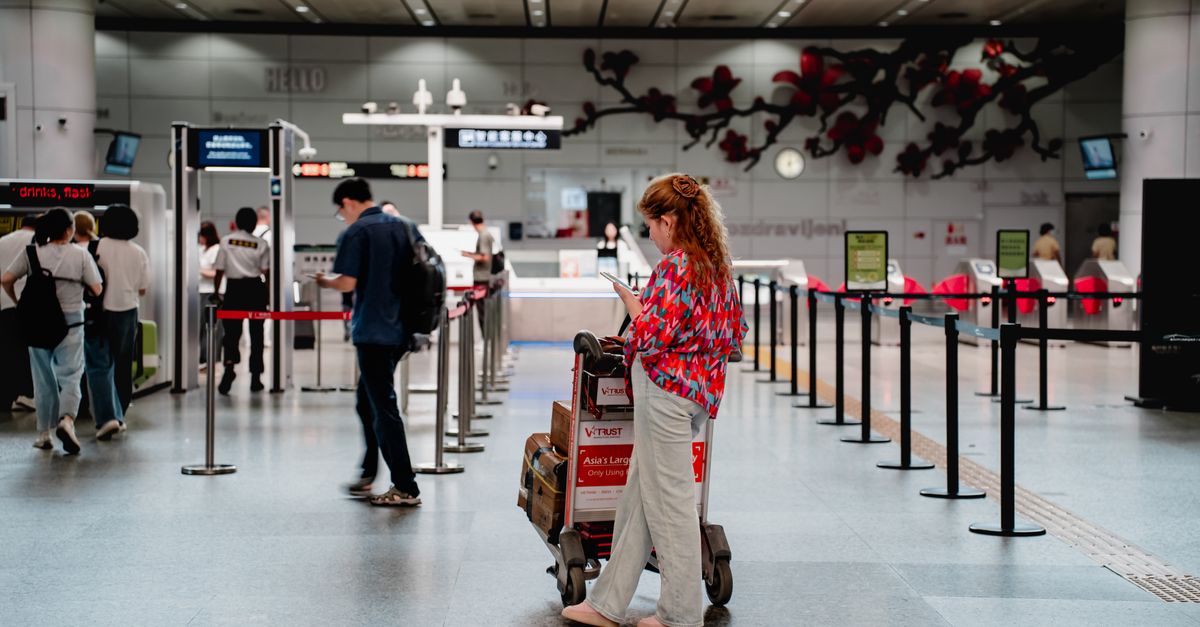
For a long time, the first job after landing somewhere new was finding the phone counter in arrivals. You queued, handed over your passport, pointed at a package on a laminated card and waited while someone set up your phone. In plenty of countries that still works perfectly well, and a local SIM has strengths an eSIM cannot match.
It also has costs that are easy to underestimate when you are planning from your sofa: time, paperwork and energy, needed at the exact moment you have least of all three. This guide compares the two honestly, so you can decide before you fly rather than at the kiosk.
How buying a local SIM usually works
Local SIM cards are sold at operator counters in airport arrival halls, at network shops in town and, in some countries, in convenience stores and supermarkets. Many operators offer tourist packages with a set amount of data for a set number of days, sometimes with local minutes included.
The process is similar almost everywhere: you choose a package, show identification, pay, and the staff put the card in your phone and check that it works. When it goes smoothly, it is efficient. When the queue is long or the shop is closed, it becomes the first obstacle of the trip.
Get your Thailand eSIM in 30 seconds
Instant delivery, 4G/5G speeds, no roaming bills.
ID checks and registration
This is the step travellers most often forget. In many countries, prepaid SIM cards have to be registered to the buyer, and a passport is commonly the document asked for. The details vary by country and can change, so check the situation for your destination before you count on buying a card.
In practice, that means:
- Having your passport on you, not locked in the hotel safe or packed in a checked bag
- Allowing time for the registration to go through, which is sometimes immediate and sometimes not
- Being ready to give an address or other details if the form asks for them
The hidden cost: time and energy on arrival
A local SIM has to be bought in person, which means after a flight, often tired, possibly at night. Arrival counters may be closed for late landings, queues can be long when several flights land together, and smaller airports may have no counter at all.
Meanwhile you may need data straight away: to message the person meeting you, open a ride-hailing app, check the address of your accommodation or confirm your train. Airport Wi-Fi can bridge the gap, but it often asks you to register first.
Language is the other factor. Explaining what you need, understanding the package conditions and following setup menus in another language is perfectly manageable, just slower than doing it at home in your own. Packages and conditions can also differ between the airport counter and shops in town, so compare them if you have the time.
What a local SIM does better
A fair comparison has to admit where local cards win:
- A local phone number. Handy for calling restaurants, taking calls from drivers or couriers, and for local services that ask for a local number.
- Long stays. If you are spending months in one country, a local plan can make more sense over time, especially once you have settled in.
- Phones without eSIM. An unlocked phone with only a physical SIM slot can still use a local card.
What a travel eSIM does better
A travel eSIM moves the whole process to your home, before the trip:
- You buy online, and the HelloSIM QR code arrives by email straight away; checkout needs only an email address.
- You install it on your home Wi-Fi, so there is no counter to find and no queue to stand in.
- It connects once you arrive and switch the line on, with data roaming turned on for that line.
- Your own SIM stays in the phone, so your usual number keeps receiving calls and texts, including bank codes, and WhatsApp stays on that number.
- Regional plans cover several countries on one eSIM, and you can top up the same eSIM if you need more data.
- Setup instructions are in a language you understand, and help is available by email at [email protected] and through the live chat in the HelloSIM app.
The trade-off is that a HelloSIM eSIM is data-only. There is no local number, so calls and messages go through apps such as WhatsApp, FaceTime, Telegram or Viber.
Get your Turkey eSIM in 30 seconds
Instant delivery, 4G/5G speeds, no roaming bills.
If you go local, protect your home SIM
In a phone with a single SIM slot, a local card means taking your own SIM out. Keep it in a small SIM case or taped inside a notebook rather than loose in a pocket, and bring the ejector pin with you. Your usual number stays offline until the card goes back in, so text-message codes from your bank will not reach you in the meantime.
Your phone must also be carrier-unlocked to accept another network's card. If it was bought on a contract, ask your carrier before you travel rather than discovering the lock at the counter.
Which should you choose?
- City break or a holiday of a week or two: a travel eSIM saves you the queue and keeps your number active.
- Several countries on one trip: a regional eSIM avoids buying a new SIM at every border.
- Arriving late at night or at a small airport: an eSIM installed at home means you are not relying on a counter being open.
- Months in one country, needing a local number: a local SIM can be worth it, and arriving with an eSIM covers the first days while you get settled and find the right shop.
- An unlocked phone without eSIM: a local SIM is the practical route.
Get your Latin America eSIM in 30 seconds
Instant delivery, 4G/5G speeds, no roaming bills.