
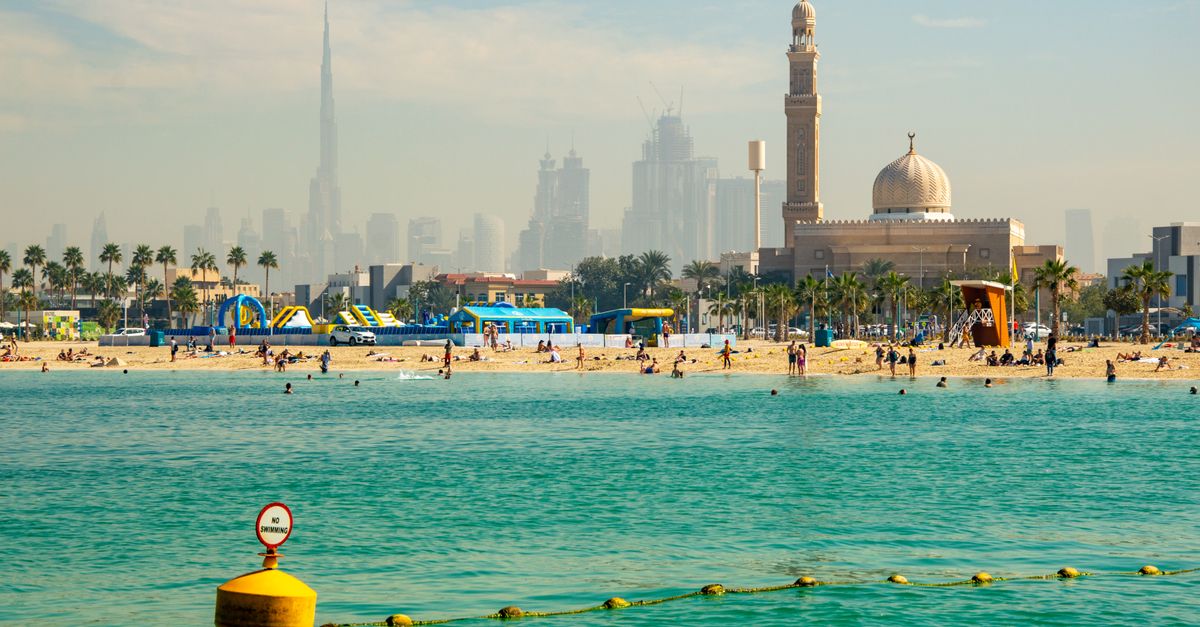
The UAE really has two seasons: a pleasant, sunny winter and a long, intensely hot summer. When you travel shapes everything from what you can do outdoors to what you'll pay for a hotel, so it pays to match your dates to your plans.
Winter (November to March): peak season
This is when most people visit, and for good reason. Daytime temperatures are mostly in the 20s °C, desert evenings call for a light jacket, and the sea is still comfortable for swimming.
- It's the ideal time for beaches, desert camping, hiking around Hatta and Ras Al Khaimah, and eating outdoors.
- Hotels are at their busiest and most expensive, especially over Christmas, New Year and school holidays, so book well ahead.
- Rain is rare, but the occasional heavy downpour can disrupt roads, and early-morning fog sometimes delays flights.
Get your United Arab Emirates eSIM in 30 seconds
Instant delivery, 4G/5G speeds, no roaming bills.
Spring (April and May): warming up fast
Early April can still be pleasant, but temperatures climb quickly and May often feels like summer has already arrived. Crowds thin out and hotel rates start to soften. Plan outdoor sightseeing for mornings and evenings, and save the hottest hours for museums, malls and the pool.
Summer (June to September): hot, humid and good value
Daytime highs regularly pass 40 °C, and coastal humidity can make it feel even hotter. The sea becomes bath-warm and offers little relief.
- Hotel rates are often at their lowest of the year, with many properties running summer offers.
- Life moves indoors: malls, museums, indoor theme parks, ice rinks and aquariums.
- Dubai Summer Surprises usually brings shopping events and family entertainment.
- Desert trips are best kept to early mornings, and midday walks are best avoided altogether.
October: the season reopens
October is a transition month, still hot at the start and increasingly comfortable by the end. Outdoor favourites such as Global Village, Dubai's large seasonal park of cultural pavilions and street food, typically reopen around this time, and hotel rates rise again as winter approaches.
Ramadan, Eid and major events
Ramadan follows the Islamic lunar calendar, so it moves about 11 days earlier each year; check the dates for your travel year. Visiting during the holy month is entirely possible: days are quieter, some opening hours change, and evenings come alive with iftar meals and night markets. Eid al-Fitr at the end of Ramadan and Eid al-Adha roughly two months later are public holidays, when hotels fill with visitors from around the region.
Other well-known dates:
- UAE National Day (2 December): flags, parades and fireworks across the country.
- Dubai Shopping Festival: a winter programme of sales, concerts and fireworks, usually from December into January.
- Abu Dhabi Grand Prix: the Formula 1 race on Yas Island, usually in late November or early December, when Abu Dhabi hotels book up fast.
- New Year's Eve: fireworks at the Burj Khalifa draw enormous crowds, so arrive very early or book a viewing spot.
Stay connected in the United Arab Emirates
Whatever the season, data helps you plan around it: checking the heat forecast before a desert trip, confirming Ramadan opening hours, following event schedules and finding a spot for the fireworks. A HelloSIM eSIM is data-only and installs at home. Its validity starts only when it first connects to a network in the UAE, so buying early for a winter trip is perfectly fine.
Get your United Arab Emirates eSIM in 30 seconds
Instant delivery, 4G/5G speeds, no roaming bills.