
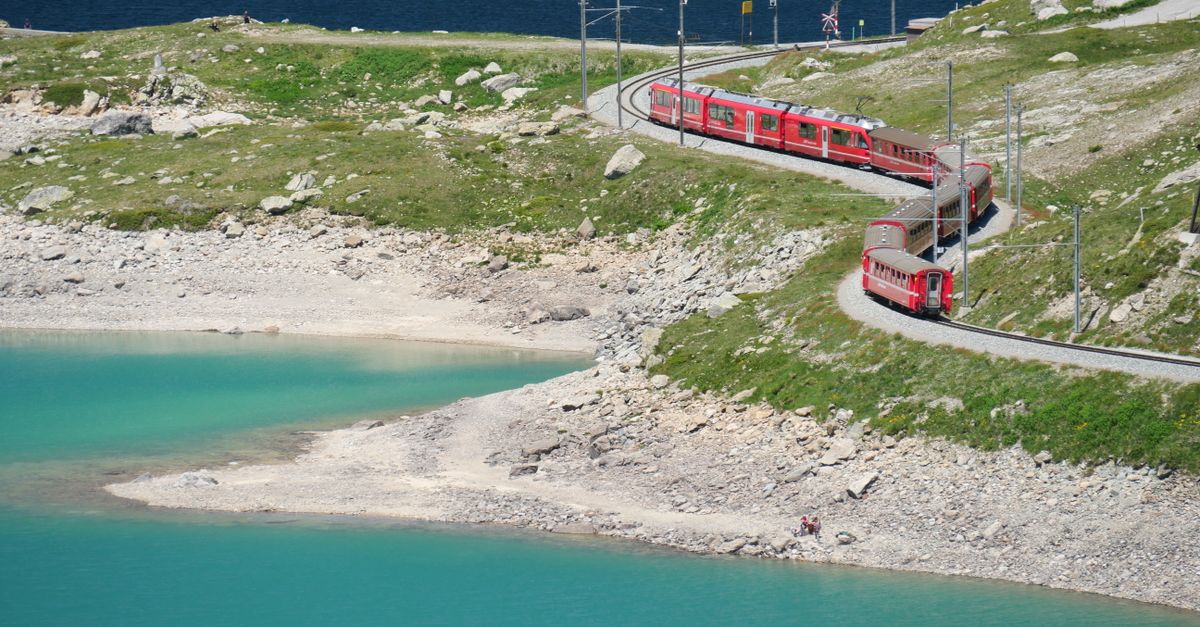
Switzerland has one of the most integrated public transport systems anywhere: trains, buses, boats and mountain lifts run to connecting timetables, often from the same station. Most visitors never need a car, and many of the places worth seeing are car-free anyway.
From the airport into town
- Zurich Airport: the railway station sits directly below the terminals, with trains to Zurich main station in around 10–15 minutes and direct services to cities such as Lucerne, Bern and Basel.
- Geneva Airport: trains reach Geneva Cornavin in under 10 minutes, and many continue to Lausanne and beyond. Look in the baggage hall for a machine that has long offered arriving passengers a free ticket for local transport into the city.
- Basel EuroAirport: the airport sits on French soil; take the Swiss exit and bus 50 to Basel SBB station, around 20 minutes away.
Get your Switzerland eSIM in 30 seconds
Instant delivery, 4G/5G speeds, no roaming bills.
Trains: the backbone of Swiss travel
The national rail network, run mainly by SBB, links almost every town, with regular departures designed to connect. Buy tickets before you board, in the SBB Mobile app, at machines or at ticket offices; travelling without a valid ticket means a hefty surcharge. Advance "Supersaver" fares on selected trains can be much lower than standard prices, and first class is worth considering on busy summer routes.
Passes worth comparing:
- Swiss Travel Pass: travel as often as you like on trains, buses, boats and city transport in many towns for consecutive or flexible days, with some mountain railways included and discounts on most others.
- Half Fare Card: half price on most trains, buses, boats and many mountain lifts for a month; good value if you travel less often or plan big summit trips.
Swiss rail also offers a luggage-forwarding service between many stations, which makes hopping between bases with heavy bags much easier.
Scenic routes, PostBuses and mountain lifts
The famous panoramic trains, such as the Glacier Express, Bernina Express and GoldenPass Express, run on regular lines but need seat reservations for the panoramic carriages. Where the tracks end, yellow PostBuses climb to mountain villages and passes, sounding their three-note horn on hairpin bends. Cable cars, funiculars and cogwheel railways take you the rest of the way, and lake boats on Lake Geneva, Lake Lucerne and elsewhere double as transport and sightseeing.
Cities: trams, buses, taxis and ride apps
City transport is frequent and easy to use. Zurich, Geneva and Basel lean heavily on trams, and Lausanne has a steep metro line. Many cities give overnight guests a visitor card with free local transport, so ask at check-in. Taxis are clean and reliable but expensive. Uber operates in larger cities such as Zurich and Geneva, which is handy late at night.
Driving and car rental
Traffic drives on the right. Motorways require a vignette, an annual toll that is also sold digitally; cars rented in Switzerland normally include one, but check if you rent across a border. Speed cameras are common and fines can be steep. Several high mountain passes, such as the Furka, Grimsel and Susten, close for winter, and car trains carry vehicles through tunnels such as the Lötschberg. Car-free resorts like Zermatt, Wengen and Mürren mean parking in the valley and continuing by train or cable car.
Intercity tips
- Rough journey times: Zurich to Bern or Basel about an hour, Zurich to Geneva under three hours, Zurich to Lugano about two hours.
- Ordinary domestic trains don't need seat reservations, so in peak season arrive a few minutes early to find a seat.
- Direct trains run to Milan, Paris, Munich and other cities in neighbouring countries.
Stay connected in Switzerland
Live departure boards, platform changes, digital tickets and ride apps all need data, and so do offline-map downloads before a mountain hike. A HelloSIM eSIM is data-only, installs at home before you travel and connects once you arrive, so you can buy tickets in the app straight from the platform. Crossing into France, Italy, Germany or Austria by train? A regional plan suits multi-country routes.
Get your Europe eSIM in 30 seconds
Instant delivery, 4G/5G speeds, no roaming bills.
Get your Switzerland eSIM in 30 seconds
Instant delivery, 4G/5G speeds, no roaming bills.