
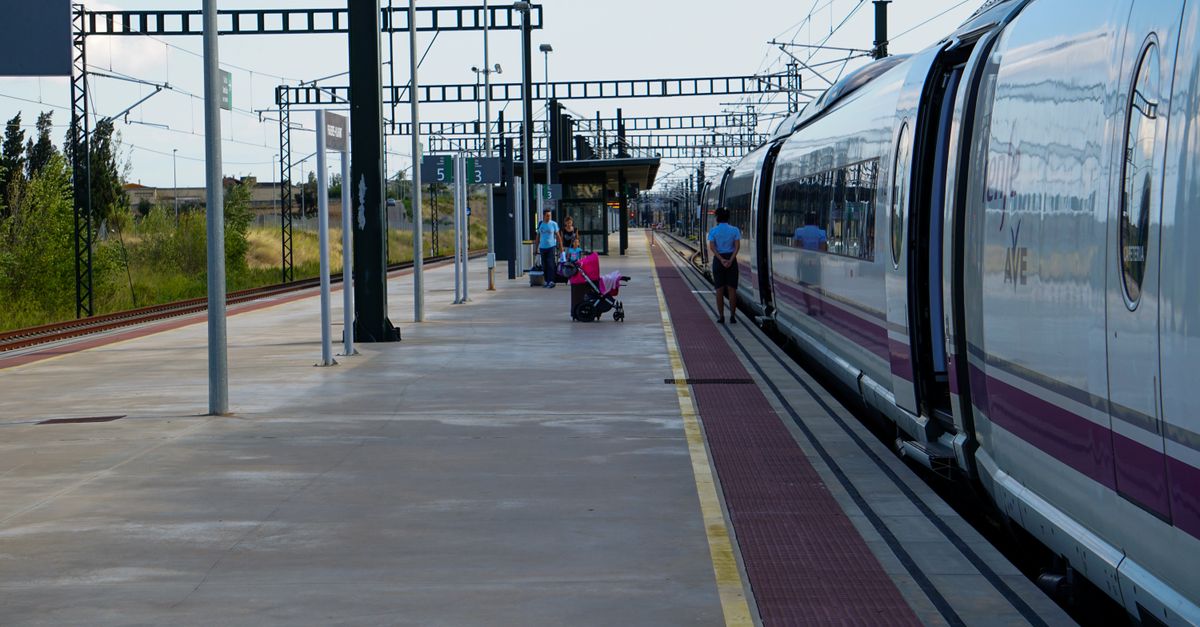
Spain has one of the most extensive high-speed rail networks in the world, efficient metros in its big cities and a dense coach network that reaches almost every town. Here is how to use it all, from the moment you land.
From the airport to the city
- Madrid-Barajas: Metro line 8 runs to Nuevos Ministerios (an airport supplement applies), Cercanías commuter trains leave from Terminal 4 for Chamartín and Atocha, and an airport express bus runs into the centre. Official taxis charge a fixed fare to central Madrid.
- Barcelona-El Prat: the Aerobús runs frequently to Plaça de Catalunya, the R2 Nord train leaves from Terminal 2, and metro line L9 Sud serves both terminals.
- Málaga: the C1 commuter train reaches the city centre in one direction and continues along the Costa del Sol in the other.
- Valencia and Seville: Valencia's airport is on metro lines 3 and 5, while Seville relies on an airport bus and taxis.
Get your Spain eSIM in 30 seconds
Instant delivery, 4G/5G speeds, no roaming bills.
High-speed and regional trains
- Renfe runs the AVE high-speed trains and its lower-cost Avlo brand, while Ouigo and Iryo compete on busy routes such as Madrid to Barcelona, Valencia and Andalusia.
- Fares change with demand, so booking a few weeks ahead usually pays off.
- At high-speed stations your luggage goes through a security scanner, so allow a little extra time before boarding.
- Avant and regional trains cover shorter hops such as Madrid to Toledo, and Cercanías (Rodalies in Catalonia) are the commuter lines around big cities.
- Tickets are sold through each operator's app and website or at station machines.
Metros and city transport
Madrid, Barcelona, Valencia, Bilbao, Seville and Málaga all have metro systems, backed up by buses and, in several cities, trams.
- Madrid: buy a rechargeable Multi card and load single or ten-trip tickets, or get a tourist travel pass valid for one to seven days.
- Barcelona: the T-casual ticket covers ten journeys for one person, and the Hola Barcelona travel card suits short, busy stays.
- In the old centres of Seville, Granada, Córdoba and Toledo, walking is often faster than any bus.
Coaches, taxis and ride apps
- Long-distance coaches are often less expensive than the train and reach smaller places the railway misses, such as Andalusia's white villages. ALSA is the largest operator.
- A green light on a taxi's roof means it is free. Taxis can be hailed on the street, found at ranks or booked by app.
- Cabify, Uber, Bolt and FreeNow operate in Madrid and several other big cities, alongside licensed taxis. Coverage is patchier in smaller towns.
Driving and car rental
- Spain drives on the right, and main roads are generally excellent.
- A car is ideal for Andalusia's white villages, the north coast, rural Galicia and the islands, but a burden in big-city centres, where parking is scarce and low-emission zones restrict some vehicles. Ask your rental company whether your car can enter them.
- Motorways marked AP are often toll roads, while A-numbered autovías are usually free.
- Check licence requirements, the fuel policy and what the insurance covers before you collect the car.
Intercity tips
- Domestic flights make sense for the Canary and Balearic Islands, or for long hops such as Barcelona to Seville.
- Ferries link Barcelona, Valencia and Dénia with Mallorca, Menorca and Ibiza.
- High-speed trains connect Barcelona with several French cities. For Portugal, coaches and flights are often simpler than the train.
- Keep e-tickets on your phone, and screenshot them in case you lose signal in a tunnel or a station basement.
Stay connected in Spain
Getting around Spain is far easier with live data: train tickets and platform changes sit in operator apps, ride apps need a connection to call a car, and live maps keep you on track through tangled old towns. A HelloSIM eSIM supplies that data without swapping SIM cards: install it at home, switch it on when you land and keep your normal line for calls and texts. Continuing into France or Portugal? A regional plan covers both.
Get your Europe eSIM in 30 seconds
Instant delivery, 4G/5G speeds, no roaming bills.
Get your Spain eSIM in 30 seconds
Instant delivery, 4G/5G speeds, no roaming bills.