
Thailand still offers excellent value, but costs vary widely between a Chiang Mai guesthouse and a Phuket beach resort. The figures below are rough ranges in Thai baht (THB) to help you plan. Prices change with the season, the exchange rate and inflation, so treat them as a guide rather than a quote.
Daily budgets at a glance
Per person, per day, sharing a room where relevant:
- Budget: around 1,000–1,800 baht for dorm beds or simple rooms, street food, and buses or trains.
- Mid-range: roughly 2,500–5,000 baht for comfortable hotels, a mix of local and international restaurants, some ride-app journeys and a paid activity most days.
- Luxury: from around 8,000 baht upwards for boutique hotels or beach resorts, fine dining and private transfers.
Bangkok, Phuket and the smaller islands sit at the higher end, while the north and the northeast are noticeably more affordable.
Get your Thailand eSIM in 30 seconds
Instant delivery, 4G/5G speeds, no roaming bills.
Accommodation
- Dorm beds: around 250–600 baht a night
- Simple guesthouse rooms with a fan or air-conditioning: roughly 600–1,200 baht
- Mid-range hotels: roughly 1,500–3,500 baht
- Upscale hotels and resorts: from around 5,000 baht, rising steeply on the islands
Rates can jump over Christmas, New Year and Chinese New Year, while rainy-season rates are often much lower.
Food and drink
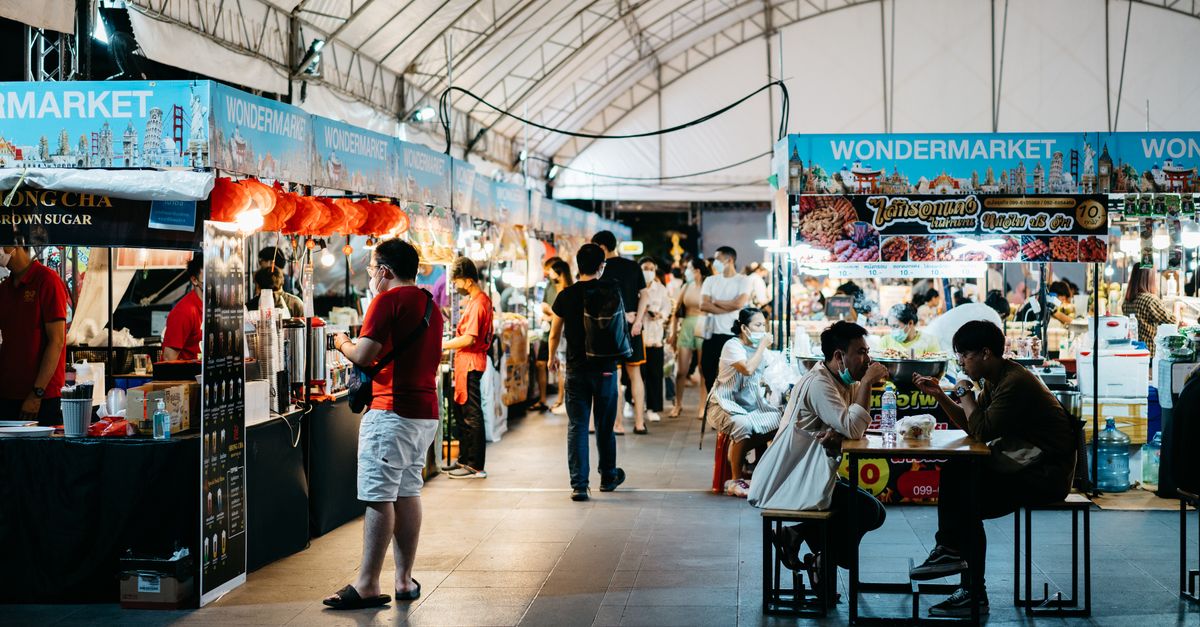
Food is where Thailand really shines for budget travellers. A plate of street food or a bowl of noodles typically costs around 50–100 baht, and a dish in a casual sit-down restaurant around 100–250 baht. International restaurants, hotel dining and rooftop bars cost far more, and imported wine is pricey. A beer from a convenience store costs a fraction of the same bottle in a bar.
Getting around
- A single BTS or MRT ride in Bangkok usually costs well under 100 baht.
- Grab or a metered taxi across central Bangkok: often around 100–300 baht, depending on traffic and time of day.
- Overnight sleeper train from Bangkok to Chiang Mai: roughly 800–2,000 baht, depending on class and berth.
- Domestic flights booked early: sometimes from around 1,000–2,000 baht, plus bags.
- Island ferries: usually a few hundred baht per trip, more for speedboats.
- Scooter rental: around 200–350 baht a day.
Activities and extras
Many temples are free or charge a modest fee, while big-name sights such as the Grand Palace cost more. National parks charge separate entry fees, which are often higher for foreign visitors. An hour of traditional Thai massage at a simple local shop costs around 250–500 baht. Cooking classes, diving courses and island tours are the bigger line items, so set money aside for the few you really want.
Money-saving tips
- 1Withdraw larger amounts less often: Thai ATMs typically charge foreign cards a fixed fee of roughly 200–250 baht per withdrawal.
- 2When a card machine or ATM offers to charge you in your home currency, choose baht instead.
- 3Eat where locals eat, and buy drinks from shops rather than bars.
- 4Take the overnight train or bus to save a night's accommodation.
- 5Travel in the shoulder or rainy season for lower room rates.
- 6Use the BTS, MRT and river boats instead of taxis in Bangkok.
- 7Base yourself in Chiang Mai or smaller towns for longer stretches; your money goes further there.
Stay connected in Thailand
Mobile data helps you stick to a budget: compare room rates, convert prices on the spot, check ride fares before you book and find good-value local restaurants. Roaming on your home plan can come with a daily charge, so check your current tariff before you go. A HelloSIM eSIM is data-only and prepaid, so there are no surprise roaming bills on that line; install it at home, it connects on arrival, and you can top up the same eSIM if you need more.
Get your Thailand eSIM in 30 seconds
Instant delivery, 4G/5G speeds, no roaming bills.