
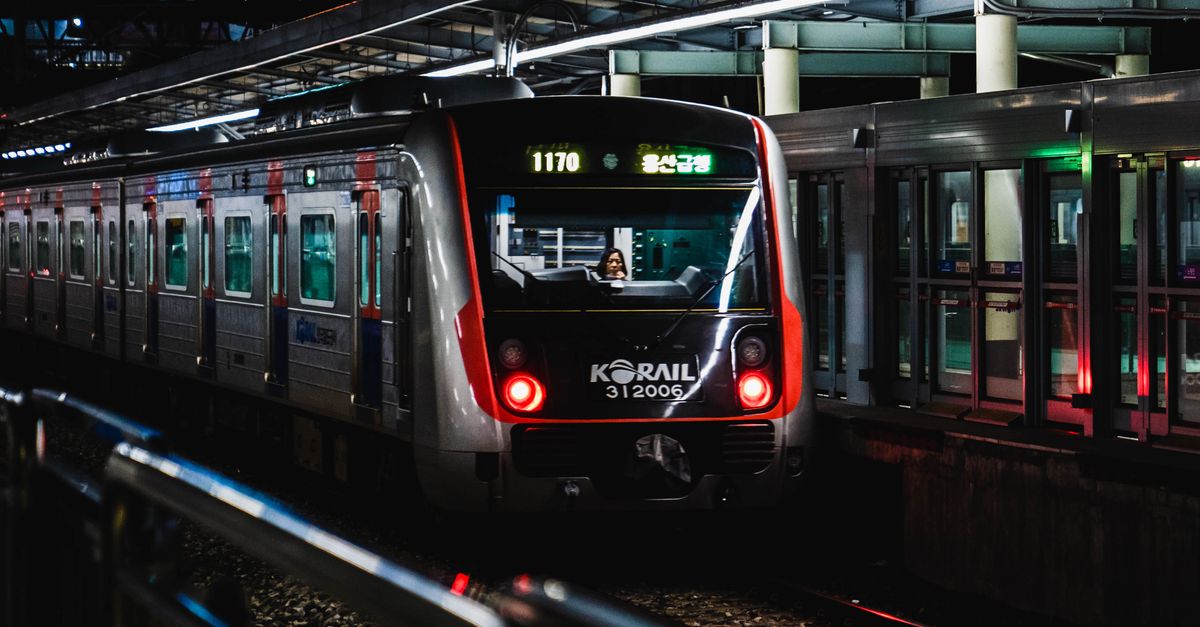
Getting around South Korea is refreshingly easy: public transport is clean, punctual, signposted in English and good value. With a T-money card and the right apps on your phone, you can reach almost anywhere without a car.
From the airport to the city
Most international flights land at Incheon International Airport, west of Seoul on its own island.
- AREX train: the Airport Railroad runs an express service non-stop to Seoul Station and a slower all-stop train that connects with several subway lines, including at Hongik University (for Hongdae) and Gimpo Airport.
- Airport limousine buses: comfortable coaches to major districts and hotels across Seoul and to other cities, handy if you're carrying heavy luggage.
- Taxis: waiting at official ranks outside arrivals around the clock. Ignore anyone offering a ride inside the terminal.
Gimpo Airport, closer to central Seoul, handles domestic and some regional flights and sits on the subway network. Busan's Gimhae Airport links to the city by light rail and bus, and Jeju International Airport is a short ride from Jeju City.
T-money and the subway
Buy a T-money card at a convenience store or station and top it up with cash at station machines or store counters. It works on subways and buses in Seoul and most other cities, as well as in many taxis and convenience stores. Transfers between subway and bus within a short window are discounted, as long as you tap out when leaving the bus as well as tapping in.
Seoul's subway covers the city and much of the surrounding region, with English announcements, colour-coded lines and numbered stations. Exits are numbered too, and picking the right one can save a long walk. Busan, Daegu, Daejeon and Gwangju also have metro systems.
Intercity trains
- KTX: high-speed trains connect Seoul with Busan in roughly two and a half hours, as well as Daejeon, Daegu, Gyeongju, Jeonju, Gwangju, Mokpo and Gangneung. Most leave from Seoul Station or Yongsan.
- SRT: a separate high-speed service from Suseo Station in south-east Seoul, convenient if you're staying in Gangnam.
- ITX and Mugunghwa: slower, less expensive trains that stop at more towns.
- Korail Pass: a rail pass for foreign visitors covering most Korail trains (not SRT) for a set number of days. Compare it with single tickets for your route.
Book through Korail's website or app; weekend and holiday trains sell out.
Buses
Express and intercity buses reach places the railway doesn't, such as Sokcho and many smaller towns, and they're often the simplest option across the mountains. In Seoul, the main hubs are the Express Bus Terminal south of the river and Dong Seoul Bus Terminal in the east. Premium buses have just three wide reclining seats per row, worth the small extra cost on long journeys. City buses are frequent and colour-coded by route type, and map apps show live arrival times at each stop.
Taxis and ride apps
Taxis are plentiful and metered. Standard taxis cost the least, while black deluxe taxis charge more, and in Seoul you can pre-book international taxis with English-speaking drivers. Kakao T is the main app for calling a taxi, showing your route and an estimated fare. Fares rise late at night, and most taxis take cards as well as cash. Have your destination written in Korean, as drivers may not recognise romanised names.
Driving and domestic flights
Traffic drives on the right. A hire car is most useful on Jeju and for rural road trips; in Seoul, traffic and parking make it more trouble than it's worth. Ask your rental company which licence documents they need before you travel, and expect plenty of speed cameras. Domestic flights link Seoul's Gimpo Airport with Jeju, Busan and other cities, with departures to Jeju throughout the day.
Stay connected in South Korea
Korean transport is built around apps: Naver Map and KakaoMap show live bus arrivals and the best station exit, Korail's app holds your train tickets and Kakao T brings a taxi to where you're standing. Google Maps covers public transport but is patchy for walking and driving directions here. A HelloSIM eSIM keeps all of that running from the arrivals hall: it's data-only, installed before you leave home and connects as soon as you land at Incheon.
Get your Asia Pacific eSIM in 30 seconds
Instant delivery, 4G/5G speeds, no roaming bills.
Get your South Korea eSIM in 30 seconds
Instant delivery, 4G/5G speeds, no roaming bills.