
South Korea has four sharply defined seasons, and each one changes what a trip feels like. Spring and autumn are the favourites for good reason, but summer and winter have their own rewards if you plan around the weather.
Spring (March to May): blossom season
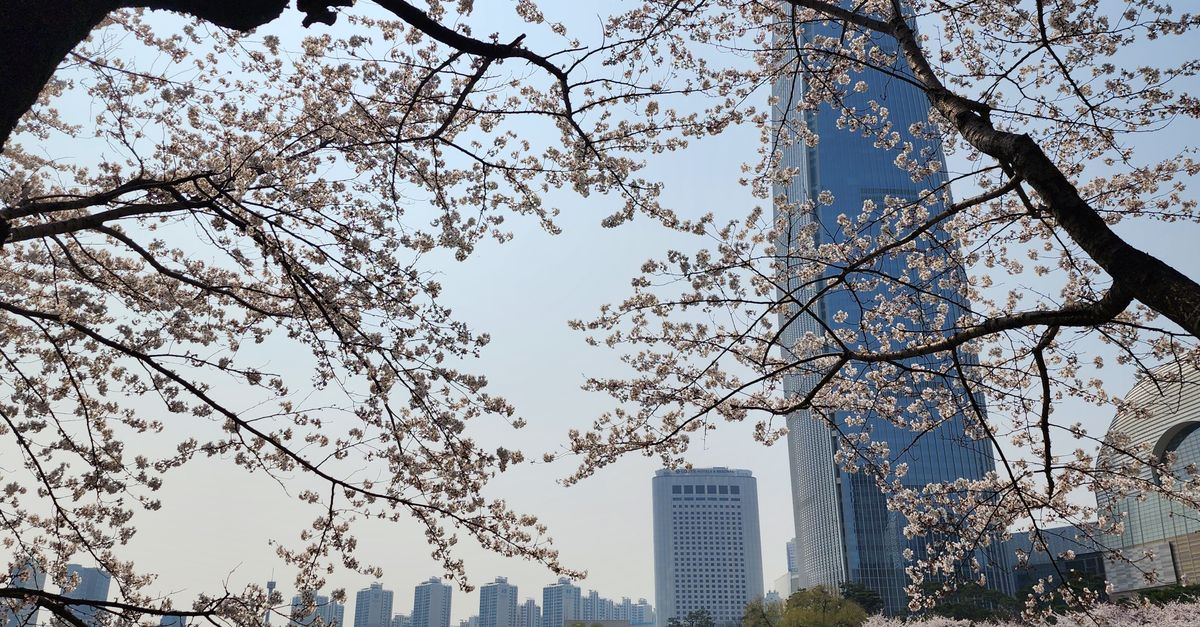
March starts chilly and warms quickly. Cherry blossom opens first in the south, on Jeju and around Busan, often from late March, and reaches Seoul in early to mid April, though the dates shift a little each year. Jinhae, near Busan, hosts the best-known cherry blossom festival, while in Seoul the Yeouido riverside and Seokchon Lake draw big crowds.
Spring can also bring hazy days of fine dust and yellow dust, so locals keep an eye on air-quality apps. May is warm and green, and Buddha's Birthday fills temples with paper lotus lanterns, with Seoul's Lotus Lantern Festival parade a highlight.
Summer (June to August): heat, rain and beaches
Summer is hot and humid. The monsoon, known as jangma, usually arrives in late June and lasts into July, bringing heavy downpours that come and go rather than constant rain. Typhoons can affect the south and Jeju from late summer into September.
Late July and early August is the domestic holiday peak, when beaches such as Haeundae are packed and coastal accommodation costs more. The Boryeong Mud Festival on the west coast draws a lively crowd in July. On the plus side, evenings are long and night markets and riverside parks stay busy until late.
Autumn (September to November): crisp and colourful
For many travellers this is the best time to visit. Humidity drops, skies clear and the mountains turn red and gold, starting in Seoraksan around mid-October and spreading south into early November. The Busan International Film Festival takes place in October, and the Andong mask dance festival and Jinju's lantern festival fill out the autumn calendar. Pack a light jacket for cool evenings, especially from late October.
Winter (December to February): cold and clear
Winters are cold and dry, with Seoul regularly dipping below freezing and icy winds blowing in from the north-west, while the mountains and the east coast get snow. It's the season for skiing in Gangwon Province, which hosted the 2018 Winter Olympics in Pyeongchang, and for ice-fishing festivals such as Hwacheon's in January. Jeju stays milder than the mainland.
Expect fewer tourists, lower hotel rates outside the ski areas and plenty of steaming street snacks, but short days for sightseeing.
Crowds, prices and public holidays
- Seollal and Chuseok: the Lunar New Year (January or February) and the autumn harvest festival (September or early October) follow the lunar calendar. Train and bus tickets sell out early, roads are jammed and many small shops and restaurants close for a day or two, though major sights and department stores often stay open.
- Blossom and foliage weekends: hotels fill up and parks get crowded, so book early and go midweek.
- Summer holidays: beach towns and Jeju are at their busiest and most expensive.
- Holidays in neighbouring countries, such as China's National Day week in early October, bring extra visitors to Seoul, Busan and Jeju.
- Quieter spells: January and February outside Seollal, and the rainy weeks of early summer.
Which season suits you
- First trip, sightseeing and city walks: April to May, or late September to November.
- Beaches and islands: June or September, either side of the peak holiday crush.
- Skiing and winter festivals: January and February.
- Photography: cherry blossom in April or autumn colour in late October.
Stay connected in South Korea
Seasonal travel is all about timing: blossom forecasts, foliage maps, monsoon alerts and air-quality readings change daily, and Korean weather and map apps track them closely. A HelloSIM eSIM is data-only and installs at home before your trip, then connects when you land. Its validity starts only when it first connects to a network in Korea, so you can buy it well ahead of a spring or autumn trip. If you're adding other Asian stops, the regional plan covers them on the same eSIM.
Get your Asia Pacific eSIM in 30 seconds
Instant delivery, 4G/5G speeds, no roaming bills.
Get your South Korea eSIM in 30 seconds
Instant delivery, 4G/5G speeds, no roaming bills.