
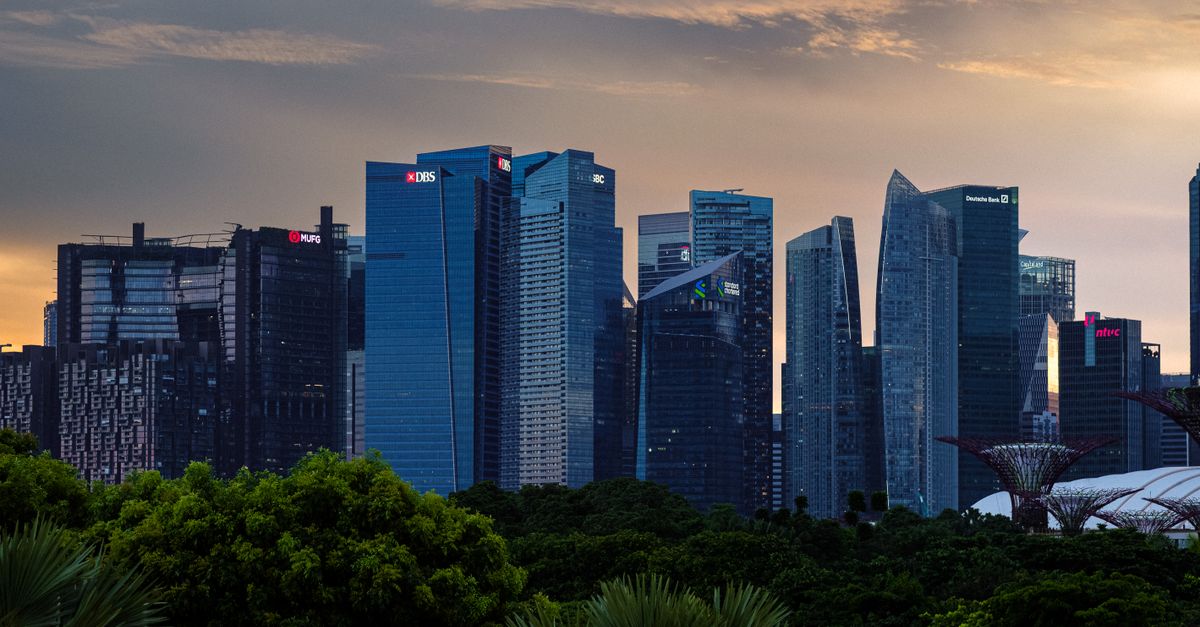
Singapore sits just north of the equator, so there is no winter, no true dry season and no bad month to visit. What does change through the year is the pattern of rain, how sticky the air feels and, above all, the crowds that gather for festivals and big events.
Singapore's climate in a nutshell
Expect warm, humid weather in every month, with daytime highs typically around 31–33°C and nights rarely dropping much below 24–25°C. Rain falls year-round, usually as heavy afternoon or evening thunderstorms that clear within an hour or two rather than all-day drizzle. Meteorologists divide the year into two monsoon seasons, separated by two shorter inter-monsoon periods.
Get your Singapore eSIM in 30 seconds
Instant delivery, 4G/5G speeds, no roaming bills.
December to early March: the Northeast Monsoon
The first half of this season, roughly December and January, tends to bring the most rain of the year, sometimes in long spells lasting several days. From late January the weather usually turns drier, sunnier and breezier, which makes February one of the most comfortable months for sightseeing.
This is also festive season: Christmas lights along Orchard Road, New Year's Eve fireworks over Marina Bay and Chinese New Year in January or February, when Chinatown fills with lanterns and street markets. Hotel rates climb over these holidays, and many hawker stalls shut for several days around the Lunar New Year.
The inter-monsoon months: April–May and October–November
Between the monsoons the winds drop and the heat builds. The months around April to June tend to be the hottest of the year, and afternoons often end in short, dramatic thunderstorms with plenty of lightning. Plan outdoor walks for the morning and keep museums, malls and conservatories for later in the day.
October and November follow a similar rhythm of humid afternoons and evening storms, with rainfall picking up towards December. Deepavali usually falls in this window, lighting up Little India, and Orchard Road's Christmas decorations go up from around mid-November.
June to September: the Southwest Monsoon
This is generally one of the drier stretches, although lines of thunderstorms known as Sumatra squalls can sweep across in the early morning. In some years, smoke from land and forest fires elsewhere in the region drifts over as haze, usually somewhere between June and October. Air-quality readings are published daily, so check them if you are sensitive to smoke.
Mid-year is busy too. School holidays bring families from across the region in June, National Day on 9 August fills Marina Bay with a parade and fireworks (with rehearsals on weekends beforehand), and the Formula 1 night race usually takes over the streets around Marina Bay in September or early October.
Crowds, prices and festival dates
- Busiest and most expensive: the Grand Prix weekend, Chinese New Year, Christmas to New Year and the dates of major concerts or conferences, when hotel rates can rise sharply.
- Often quieter: weekdays outside school holidays, and the weeks after Chinese New Year through to May.
- Moving dates: Chinese New Year, Hari Raya Puasa, Deepavali, Thaipusam and Vesak Day follow lunar or religious calendars, so check this year's dates before booking.
- Book early if your trip overlaps a big event, and consider staying slightly outside the centre for better value.
Stay connected in Singapore
In a city where a clear sky can turn into a downpour within half an hour, a live rain radar on your phone is genuinely useful, as are event updates and daily haze readings. A HelloSIM eSIM is data-only and gives you all of that without touching your home number: install it before your trip and it connects when you arrive. Staying longer than planned? You can top up the same eSIM.
Get your Singapore eSIM in 30 seconds
Instant delivery, 4G/5G speeds, no roaming bills.