
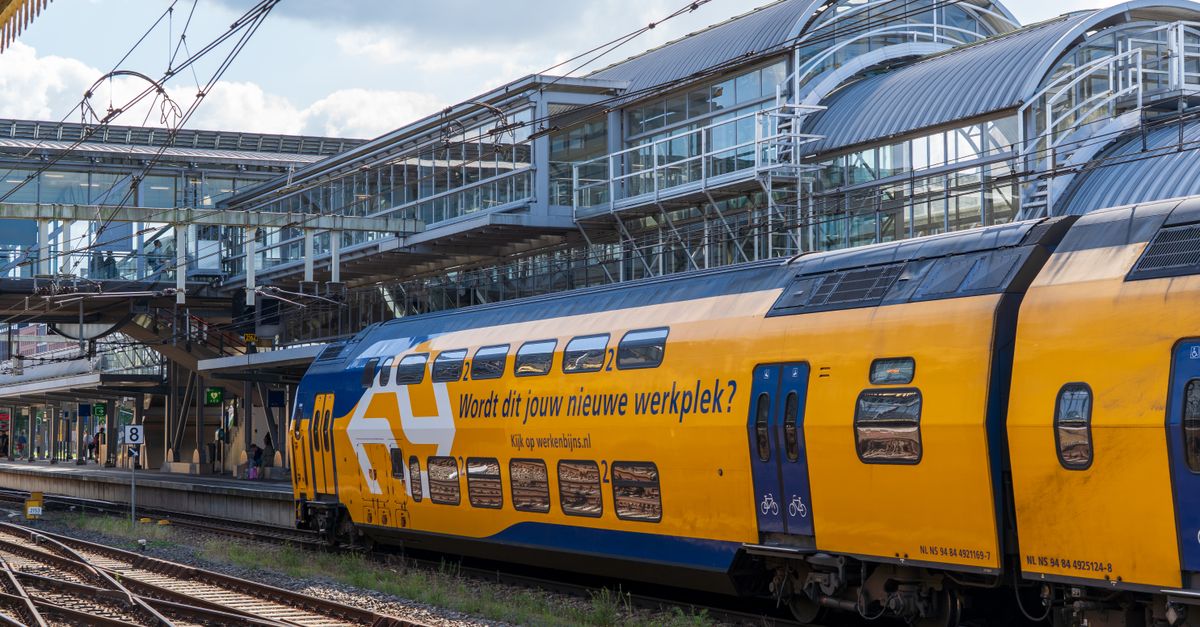
The Netherlands has one of the most joined-up transport networks in Europe: frequent trains, efficient city trams and metros, and more cycle paths than you've probably seen anywhere. Most visitors never need a car. Here's how it all works.
From the airport to the city
Most international flights land at Amsterdam Schiphol, which has a railway station directly beneath the main arrivals area.
- Trains to Amsterdam Centraal run very frequently and take roughly 15 to 20 minutes.
- Direct trains also run to Leiden, The Hague, Rotterdam and Utrecht, so you don't need to travel via Amsterdam.
- An airport express bus serves the Museumplein and Leidseplein area, handy if you're staying in the south of the city.
- If you need a taxi, use the official rank outside rather than accepting offers inside the terminal.
- Smaller airports include Rotterdam The Hague Airport and Eindhoven Airport, both linked to their city's main station by bus.
Get your Netherlands eSIM in 30 seconds
Instant delivery, 4G/5G speeds, no roaming bills.
Checking in and out: how fares work
Dutch public transport runs on a check-in, check-out system. You tap a card or phone on the reader when you start a journey and again when you finish, and the fare is worked out by distance.
- Contactless cards and phones: on trains, trams, metros and most buses you can tap in and out with a contactless debit or credit card or a phone wallet. Use the same card or device for both taps.
- OV-chipkaart: the Dutch transit card, available in an anonymous version, is an alternative if your card won't work.
- Single tickets and day passes: sold at machines and in transport apps, and useful for one-off trips.
- Always check out. Forgetting to tap out usually means paying a higher fare.
Trains between cities
NS runs most intercity services, with yellow-and-blue trains that are clean, frequent and generally punctual.
- Intercity trains stop only at larger stations; Sprinter trains stop everywhere.
- The Intercity Direct between Amsterdam, Schiphol and Rotterdam is the fastest option on that route; check whether a supplement applies to your journey.
- Most trips within the Randstad take under an hour, while Amsterdam to Maastricht is roughly two and a half hours.
- Quiet carriages marked "stilte" are ideal for reading or working.
- International trains link Amsterdam with Brussels, Paris, London and several German cities.
Trams, metros and buses
- Amsterdam: trams cover the centre, the metro serves outer districts, and free ferries cross the IJ from behind Centraal Station to Amsterdam-Noord.
- Rotterdam: a fast metro plus trams, with one metro line continuing to The Hague.
- The Hague: trams run to the beach at Scheveningen and to Delft.
- Utrecht: trams link the centre with the university campus and suburbs.
- Regional buses fill the gaps in the countryside, for example to Keukenhof in spring or the villages of Overijssel.
Cycling
Cycling is the most Dutch way to get around, and in cities it's often the fastest.
- Rent a bike from a rental shop in the centre or near a main station.
- Use the cycle paths, keep right, signal with your arm and never ride on pavements.
- Lights are essential after dark.
- Lock the frame to something solid every time; bike theft is common.
Ride apps, taxis and driving
- Ride apps: Uber and Bolt both operate in the main cities and are useful late at night, though public transport is usually quicker and far less expensive.
- Taxis: reliable but pricey; take them from official ranks.
- Car rental: traffic drives on the right. A car makes sense for rural areas, but city parking is scarce and costly. In Amsterdam, leave the car at a Park + Ride (P+R) site on the edge and continue by public transport.
- On the road: expect cyclists everywhere, especially when turning right across a cycle lane.
Stay connected in the Netherlands
Live departure boards, platform changes and journey planners such as the NS app or 9292 all depend on mobile data, as do ride apps and turn-by-turn cycling routes. A HelloSIM eSIM keeps them running everywhere you travel in the country: install this data-only eSIM before your trip and it connects once you land. Continuing by train to Belgium, Germany or France? A regional plan may suit the whole route better.
Get your Europe eSIM in 30 seconds
Instant delivery, 4G/5G speeds, no roaming bills.
Get your Netherlands eSIM in 30 seconds
Instant delivery, 4G/5G speeds, no roaming bills.