
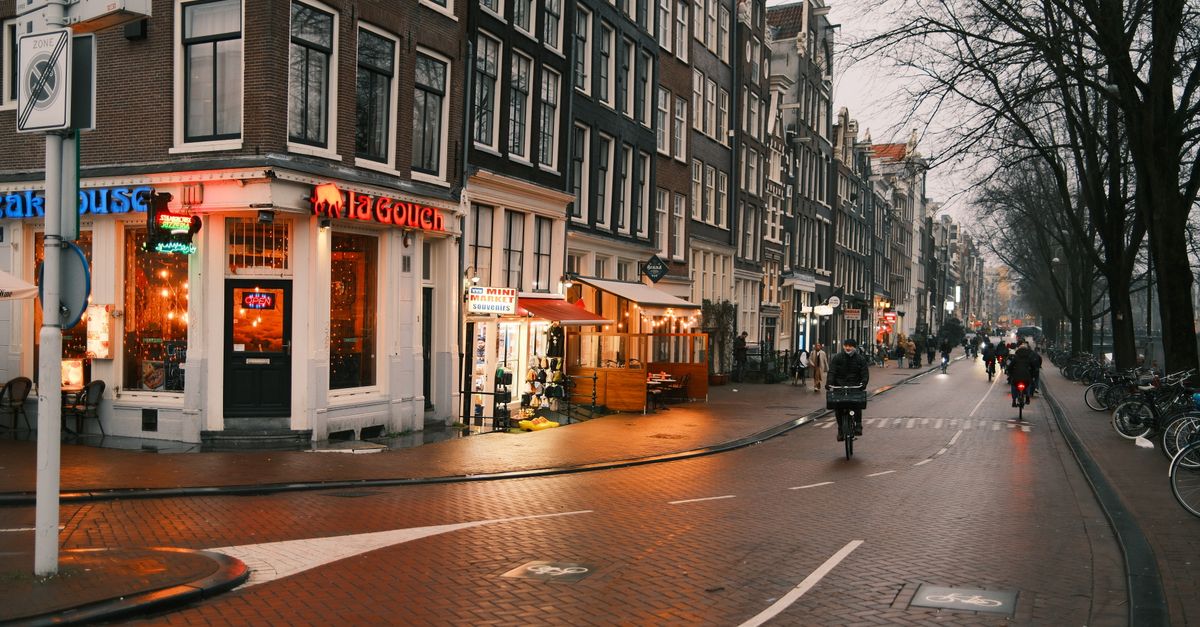
The Netherlands is one of the easiest and safest countries in Europe to explore, with reliable public services and English spoken almost everywhere. Serious incidents involving visitors are rare, and most problems, from stolen phones to close calls with bikes, are easy to avoid once you know what to watch for.
General safety
- Day-to-day risks are mostly petty theft and traffic rather than anything serious.
- Cities stay lively and feel safe late into the evening, but use the same common sense as at home: stick to well-lit streets and keep an eye on your drink in busy bars.
- Solo travellers, including women, generally find the country comfortable to explore alone.
- Keep photos of your passport and bookings on your phone and in a cloud folder.
Get your Netherlands eSIM in 30 seconds
Instant delivery, 4G/5G speeds, no roaming bills.
Bikes, trams and canals
The most common way visitors get hurt is by stepping into traffic they didn't expect.
- Red-paved lanes are for bikes, not people. Look both ways before stepping into one, and never stop on it to take photos.
- Trams are quiet and can't swerve, so listen for the bell and keep clear of the tracks.
- If you're cycling, cross tram tracks at an angle so your wheel doesn't get caught.
- Canals rarely have railings. Take care walking beside them at night, especially after a few drinks.
Pickpockets and common scams
Pickpockets work crowded places such as Amsterdam Centraal, busy trams, Dam Square and the Red Light District, as well as trains to and from Schiphol.
- Keep your phone out of back pockets and zip your bag.
- Ignore strangers offering to help at ticket machines; use them yourself or ask staff.
- Don't buy a bike from someone on the street. A suspiciously low price almost always means it's stolen.
- Street sellers offering drugs often sell fakes; simply keep walking.
- At the airport, take taxis only from the official rank and make sure the meter is running.
- Be wary of holiday rentals that ask for payment by bank transfer outside a booking platform.
Health basics
- Tap water is safe and excellent to drink everywhere.
- For minor complaints, a pharmacy (apotheek) can advise, and drugstores (drogisterij) sell basics like painkillers and plasters.
- Out of hours, cities have GP out-of-hours services (huisartsenpost) for non-urgent problems; your accommodation can point you to the nearest one.
- Travel with insurance that covers medical care, and keep regular medication in its original packaging.
- At the beach, swim where lifeguards are on duty, as North Sea currents can be strong.
Areas to take care in
Most visitors never feel unsafe, but a few places call for extra attention.
- The Red Light District is busy and lively late at night. Crowds attract pickpockets, and photographing the windows causes real trouble.
- Around Amsterdam Centraal and Leidseplein late at night, stag groups and big crowds can get rowdy.
- Parks and quiet canal paths after dark are best avoided on your own, as in any big city.
Emergencies
- 112 is the number for police, ambulance and fire in an emergency, and it's free to call from any phone.
- For non-urgent police matters, such as reporting a stolen phone for insurance, contact the police non-emergency line or go to a police station.
- If your passport is lost or stolen, contact your embassy or consulate.
Stay connected in the Netherlands
Being able to pull up a map, find the nearest pharmacy or share your live location with a friend makes any trip feel safer. A HelloSIM eSIM gives you that without hunting for a SIM shop: install it before you travel and it connects once you arrive. Because it's data-only, your own SIM stays in place for calls and texts.
Get your Netherlands eSIM in 30 seconds
Instant delivery, 4G/5G speeds, no roaming bills.