
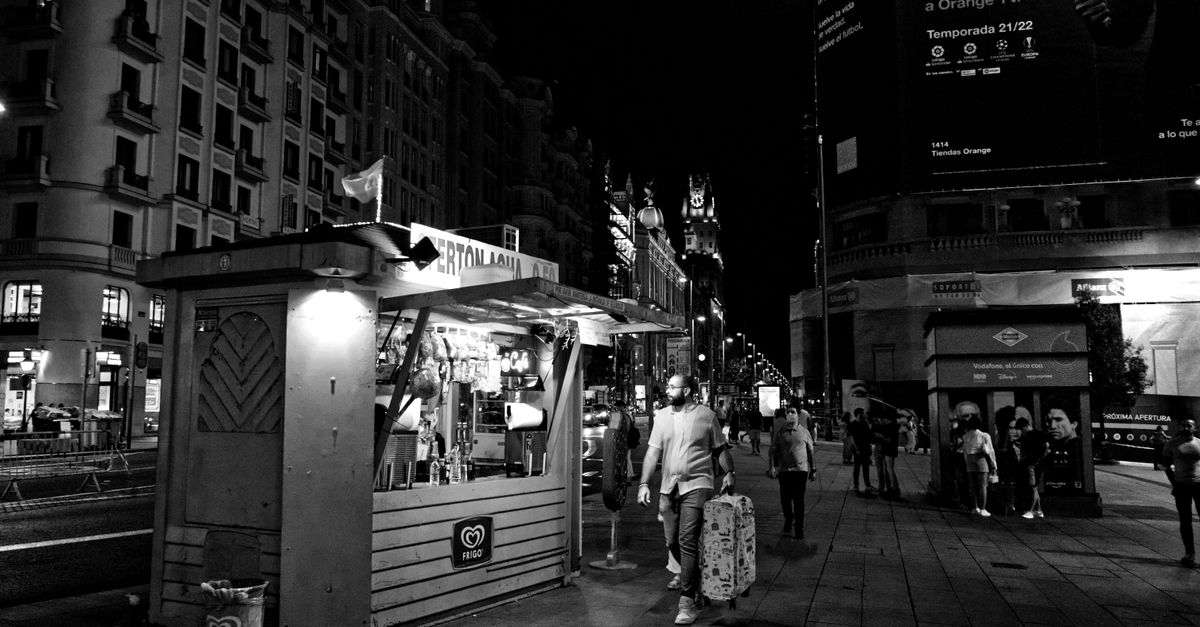
A first trip to Spain is easy to get right. Most of the surprises are pleasant ones, and the rest come down to timing, money and a few local habits. These are the practical things worth knowing before you go.
Money and cards
- Spain uses the euro. Cards and contactless payments, including Apple Pay and Google Pay, are accepted in most shops, restaurants and ticket machines.
- Keep a little cash for village bars, market stalls and small tips.
- When a card machine or cash machine offers to charge you in your home currency, choose euros instead. The rate offered on the spot is often worse than your own bank's.
- Use cash machines attached to banks, and check what your bank charges for withdrawals abroad.
Get your Spain eSIM in 30 seconds
Instant delivery, 4G/5G speeds, no roaming bills.
€1.49+
Plugs, power and time
- Sockets are type C and F, with two round pins, at 230 volts. Visitors from the UK, the US and many other countries need an adapter, and US travellers should check that chargers accept 230 volts (most phone and laptop chargers do).
- Mainland Spain and the Balearic Islands use Central European Time, while the Canary Islands are one hour behind.
Tipping and everyday etiquette
- Nobody expects a big tip. Leave the coins from your change after a coffee, and a little more after a good meal with table service.
- Greet staff with "hola" or "buenos días" when you walk into a shop or bar.
- Dinner starts late, typically around 9 pm. Turn up at 7 pm and you may find an empty dining room or a tourist menu.
- Many shops close on Sundays and, in smaller towns, for a few hours in the afternoon.
Apps worth downloading
- A maps app, with offline areas saved for each city you visit.
- Train operator apps for tickets and platform information: Renfe, plus Ouigo or Iryo if you use them.
- Ride apps such as Cabify, Uber, Bolt or FreeNow for the big cities.
- A translation app with a camera mode for menus and signs.
- Your bank's app, so you can freeze a card quickly if it goes missing.
Your first hours after landing
- 1Before leaving home, install your eSIM over Wi-Fi.
- 2On arrival, switch the HelloSIM line on, set it as the line for mobile data and turn on data roaming for that line. Switch data roaming off on your home SIM to avoid charges.
- 3Use the official airport train, metro, bus or taxi rank rather than drivers who approach you in the arrivals hall.
- 4Buy a rechargeable transport card at the first metro station you use, as single tickets add up.
- 5Drop your bags, then head out for a late lunch. Adapting to Spanish meal times from day one helps you beat jet lag.
Things that catch first-timers out
- Distances: Spain is big, so don't try to cover every region in one trip. Two or three bases make for a far better week.
- Heat: summer afternoons in the south are for shade, not sightseeing.
- Closing days: some museums close one day a week, and many shops close on Sundays.
- Regional languages: in Catalonia, the Basque Country, Galicia and Valencia, signs may show the local language first.
- Bread and water: bread is sometimes charged even if you did not order it, and you will be served bottled water unless you ask for tap water.
Stay connected in Spain
On a first trip, data is your safety net: maps when the old-town lanes all look alike, translation when the menu has no English, and a quick message to your host if you are running late. HelloSIM eSIMs are data-only, so WhatsApp stays on your usual number; the eSIM installs at home and connects when you arrive. Planning to add Portugal or France? A regional plan covers them on the same eSIM.
Get your Europe eSIM in 30 seconds
Instant delivery, 4G/5G speeds, no roaming bills.
€1.49+
Get your Spain eSIM in 30 seconds
Instant delivery, 4G/5G speeds, no roaming bills.
€1.49+