
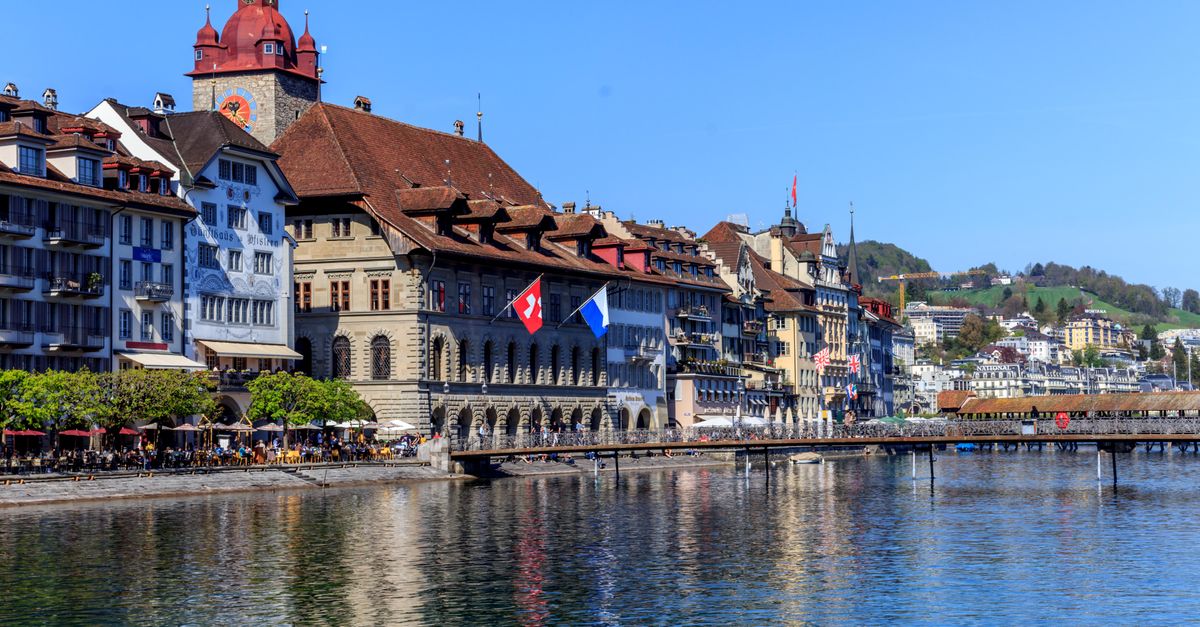
Switzerland squeezes four language regions, dozens of lakes and some of Europe's highest peaks into a country you can cross by train in a few hours. That makes it easy to combine a polished city, a medieval old town and a mountain village in one trip. Here are the places that reward a stay, who they suit and how they fit together.
Zurich: big-city energy by the lake
Switzerland's largest city is the natural starting point for many visitors, with the airport only around 10–15 minutes away by train. It suits first-timers, food lovers and anyone who wants museums and nightlife alongside postcard scenery.
- Wander the cobbled lanes of the Old Town on both banks of the Limmat, then cool off at one of the lake or river bathing spots in summer.
- Take the train up the Uetliberg for a sweeping view over the city, the lake and, on clear days, the Alps.
Get your Switzerland eSIM in 30 seconds
Instant delivery, 4G/5G speeds, no roaming bills.
Lucerne and Bern: compact, walkable old towns
Lucerne is the classic picture of Switzerland: the covered wooden Chapel Bridge, a lake ringed by mountains and paddle steamers at the quay. It is ideal for short stays and families, and under an hour from Zurich. Use it as a base for Mount Pilatus or Rigi.
Bern, the federal city, is calmer and often underrated. Its UNESCO-listed Old Town has long stone arcades, the Zytglogge clock tower and a bend of the turquoise Aare river where locals float downstream on hot days. It suits slow travellers and history fans.
Geneva: international and French-speaking
Geneva feels more cosmopolitan than anywhere else in the country, home to the European seat of the United Nations and dozens of international organisations. It suits business travellers and culture lovers. Don't miss the Jet d'Eau fountain, the hilltop Old Town around St Pierre Cathedral and a summer swim at the Pâquis baths. Lausanne, with its Olympic Museum and steep streets down to the lake, is under an hour away and makes an easy day trip, as do the Lavaux vineyard terraces.
Lugano: Italian flair in Ticino
South of the Alps, Lugano brings palm trees, lakeside promenades and espresso culture. It suits couples and anyone visiting in spring or autumn, when the south is often milder. Ride the funicular up Monte Brè or Monte San Salvatore, and follow the lakeside path to the village of Gandria. Thanks to the Gotthard Base Tunnel, Zurich is roughly two hours away by train.
Interlaken and Zermatt: mountain bases
Neither is a city, but most itineraries need one of them. Interlaken sits between Lake Thun and Lake Brienz and suits active travellers: paragliding, boat trips and quick connections to Grindelwald, Lauterbrunnen and the Jungfraujoch.
Zermatt is a car-free village at the foot of the Matterhorn, reached by train. It suits hikers, skiers and photographers, and is worth at least two nights so you have a better chance of clear skies on the Gornergrat railway.
How the cities link up
The Swiss rail timetable is built around regular, connecting departures, so a city-hopping trip rarely needs a car. A classic loop runs Zurich – Lucerne – Interlaken – Zermatt – Geneva, with Bern easy to slot in on the way back from Interlaken towards Zurich. Approximate train times:
- Zurich to Lucerne or Bern: about an hour
- Lucerne to Interlaken: around two hours on a scenic line
- Interlaken to Zermatt: roughly two and a half hours via Visp
- Zermatt to Geneva: around four hours
Rail passes cover trains, lake boats and city transport in many towns, and give discounts on most mountain railways.
Stay connected in Switzerland
City-hopping means checking platform changes, finding your hotel from the station and looking at mountain webcams before you buy a summit ticket. A HelloSIM eSIM is data-only, so your own number stays in place for calls; install it at home over Wi-Fi and it connects once you arrive. If your route continues into France, Italy, Germany or Austria, a regional plan can cover the whole trip.
Get your Europe eSIM in 30 seconds
Instant delivery, 4G/5G speeds, no roaming bills.
Get your Switzerland eSIM in 30 seconds
Instant delivery, 4G/5G speeds, no roaming bills.